2020 Honda Ridgeline Reliability Report
NHTSA data as of Oct 15, 2026Published Oct 23, 2026
Ranks 15th of 17 Ridgeline years we score.
- Owner complaints
- 169
- 19 are recall notices
- Per 10,000 cars
- 45.4
- 33,027 made for the U.S.
- Vs the average car
- 2.0×
- same age, 1× is average
- Serious outcomes
- 48
- crash, fire, injury, stall or tow
- Recalls
- 8
- NHTSA crash rating
- 5★
- overall, out of 5
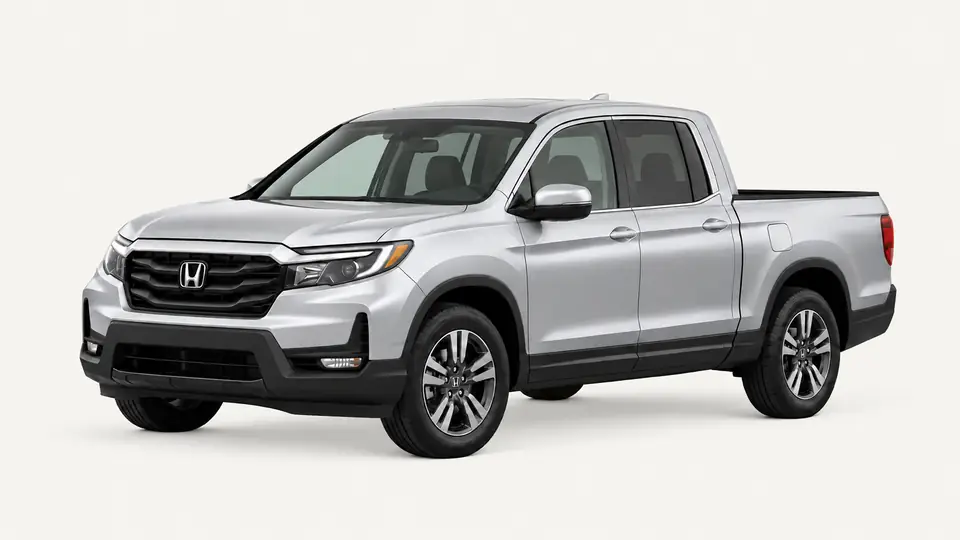
Should You Buy the 2020 Honda Ridgeline?
Only after careful checks. Our reliability score for the 2020 Honda Ridgeline is 61 out of 100, which rates Caution. Owners reported about 2.0 times as many problems as for the average car of the same age. It ranks 15th of the 17 Ridgeline years we score.
The most reported problem is the rearview camera, mostly stopped working (50 of 169 complaints). Owners also complain about auto idle stop and the headlights. 48 of the 169 complaints describe a serious outcome, such as a crash, a fire, an injury or stalling while driving.
It has 8 recalls. Honda also offers a warranty extension that may still apply, for a problem with the engine. NHTSA rates it 5 out of 5 stars overall in crash tests. For comparison, the 2019 scores 64 and the 2021 scores 63.
Before you buy, check that the recalls were done, ask a Honda dealer about warranty extension 23-009 and get an independent inspection. The full checklist is at the end of this page.
Pros
- No do-not-drive or park-outside recalls
- 5-star NHTSA overall crash rating
- 1 Honda warranty extension may cover repairs
Cons
- About 2.0 times the problems of the average car its age
- More complaints than average about major systems in the last two years
- Rearview camera: stopped working50 complaints
- Auto idle stop system: the car not starting30 complaints
How the 2020 Ridgeline Earned Its Score
Every model year starts at 100. Each part takes points away when this year has more problems than the average car of the same age. How we score
| Item | Vs average | Points lost |
|---|---|---|
| Starting score | 100 | |
| Serious problems48 complaints · average car: about 28 | 1.7× | −13 |
| Everyday problems102 complaints · average car: about 38 | 2.6× | −7 |
| Problems in the last two years33 complaints · average car: about 17 | 1.8× | −12 |
| Recalls8 recalls · average car: about 4.4 | 1.6× | −7 |
| Score | 61 |
Each part shows two counts: this year's so far, and what an average car would have at the same age. For complaints, that average car was made in the same number as this one. “Vs average” compares the two counts, but in our scoring system we first add a little to both, so a few complaints cannot swing the result. That is why it is not simply one count divided by the other. The last two years count only complaints about five systems: the engine and fuel system, transmission, brakes, steering, and airbags and seat belts.
What Owners Report
We read all 169 complaints filed with NHTSA for the 2020 Honda Ridgeline, one by one, and grouped them by the problem they describe. The most reported problems come first.
Rearview camera: stopped working
50 complaints (30%)
A feature that stopped working, problems that come and go and a failure. In 3 complaints, the problem came back after a repair. Median mileage when it started: about 40,000 miles.
Auto idle stop system: the car not starting
30 complaints (18%)
The car not starting, a feature that stopped working and stalling. 26 of these 30 complaints describe a serious outcome, most often a car that would not start. In 6 complaints, the problem came back after a repair. Median mileage when it started: about 26,000 miles.
Headlights: works on and off
10 complaints (6%)
Problems that come and go, a failure and a feature that stopped working. In 3 complaints, the dealer could not find or fix the problem. Median mileage when it started: about 2,000 miles.
Engine failure: unusual noises
8 complaints (5%)
Unusual noises, a failure and parts breaking or coming apart. 6 of these 8 complaints describe a serious outcome, most often stalling or losing power while driving. Median mileage when it started: about 118,000 miles.
Mirrors: wrong readings
7 complaints (4%)
Wrong readings, the system acting on its own and parts breaking or coming apart.
Automatic emergency braking: hard braking with nothing ahead
6 complaints (4%)
Hard braking with nothing ahead and a feature that stopped working. 1 of these 6 complaints describes a serious outcome: sudden braking.
Brakes: hard braking with nothing ahead
4 complaints (2%)
Hard braking with nothing ahead, a failure and pulling or wandering. 1 of these 4 complaints describes a serious outcome: sudden braking.
Driver-assist camera and radar failure
4 complaints (2%)
A failure that needed a new part, overheating and a stored fault code.
Loss of power (cause not stated)
3 complaints (2%)
Reduced power or limp mode and a loss of power. All 3 describe a serious outcome, most often stalling or losing power while driving. In 3 complaints, the dealer could not find or fix the problem.
Stall (cause not stated)
3 complaints (2%)
Stalling. All 3 describe a serious outcome.
Car not starting (cause not stated)
3 complaints (2%)
The car not starting. All 3 describe a serious outcome, most often a car that would not start.
Sunroof glass (shattered): shattering or cracking
3 complaints (2%)
Shattering or cracking.
Wiring, fuses or body control module failure
3 complaints (2%)
A failure. 2 of these 3 complaints describe a serious outcome, most often a tow.
Instrument cluster: works on and off
2 complaints (1%)
Problems that come and go and a feature that stopped working.
Lane keeping assist: works on and off
2 complaints (1%)
Problems that come and go and a feature that stopped working.
Show 1 more problem
Shifter or park failure
2 complaints (1%)
A failure and the car rolling away. Both describe a serious outcome, most often a tow.
Reported Once (24)
Show the 24 problems reported once
- 12V battery failure
- Adaptive cruise control: stopped working
- Airbags: no deployment in a crash
- Body seals (water leak): water leaking in
- Several warning lights at once
- Door latches: not opening or unlocking
- Engine: stalling
- Engine (misfire codes): rough running or misfires
- Engine oil consumption: burning or using oil
- Fuel diluting the engine oil
- Exterior trim: damage
- Forward collision warning: the system acting on its own
- Fuel system: warning lights
- Fuel leak: shattering or cracking
- Ignition coils or spark plugs: rough running or misfires
- Muti cable assembly sensor: works on and off
- Sun visor: sticking or stiffness
- Power windows or regulator: works on and off
- Seat belts: the system not working when needed
- Starter: the car not starting
- Transmission: fault code
- Vibration (cause not stated)
- Wheel bearings: rust or corrosion
- Wheel rim: rust or corrosion
How the 2020 Honda Ridgeline Compares With Other Years
The other Ridgeline years of the 2nd generation, 2017 to 2026.
| Year | Rating | Score | Vs average | Per 10k cars | Recalls | Most reported problem |
|---|---|---|---|---|---|---|
| 2026 | Too new | – | – | 3.4 | 0 | Headlights: works on and off |
| 2025 | Provisional 54 | – | – | 18.8 | 2 | Auto idle stop system: the car not starting |
| 2024 | Caution | 62 | 2.2× | 17.9 | 1 | Headlights: works on and off |
| 2023 | Caution | 67 | 1.4× | 17.4 | 5 | Headlights: works on and off |
| 2022 | Caution | 65 | 1.7× | 28.0 | 3 | Headlights: works on and off |
| 2021 | Caution | 63 | 1.8× | 34.0 | 7 | Headlights: works on and off |
| 2020 This year | Caution | 61 | 2.0× | 45.4 | 8 | Rearview camera: stopped working |
| 2019 | Caution | 64 | 1.4× | 33.3 | 11 | Rearview camera: stopped working |
| 2018 | Caution | 61 | 2.2× | 68.7 | 7 | Rearview camera: stopped working |
| 2017 | Avoid | 58 | 2.2× | 66.7 | 8 | Rearview camera: stopped working |
2020 Honda Ridgeline Recalls
Eight recalls cover the 2020 Honda Ridgeline. The most recent was issued in June 2026: “Rear Suspension Components May Fail.” A VIN check at NHTSA shows which are still open on a given car.
Rear Suspension Components May Fail
Failure of rear suspension components, such as the rear control arm, can cause a loss of vehicle handling and control, increasing the risk of a crash or injury.
NHTSA 26V365000Recall report (PDF)Issued Jun 4, 2026.
Air Bags May Deploy Unintentionally During a Crash
Air bags that deploy unintentionally during a crash increase the risk of injury.
NHTSA 26V332000Recall report (PDF)Owner letter (PDF)Issued May 21, 2026.
Rearview Camera Image May Not Display
A rearview camera that does not display an image can reduce the driver's rear view, increasing the risk of a crash.
NHTSA 24V321000Recall report (PDF)Owner letter (PDF)Issued May 9, 2024. By the second quarter of 2026, 79% of the cars in this recall had been fixed.
Air Bag May Deploy Unintentionally During a Crash
An air bag that deploys unintentionally during a crash can increase the risk of injury.
NHTSA 24V064000Recall report (PDF)Owner letter (PDF)Issued Feb 1, 2024. By the second quarter of 2026, 52% of the cars in this recall had been fixed.
Fuel Pump May Fail
Fuel pump failure can cause an engine stall while driving, increasing the risk of a crash.
NHTSA 23V858000Recall report (PDF)Owner letter (PDF)Issued Dec 18, 2023. By the second quarter of 2026, 73% of the cars in this recall had been fixed.
Loose Fastener on Brake Booster Assembly
Brake master cylinder separation can cause a loss of brake function and increase the risk of a crash.
NHTSA 23V458000Recall report (PDF)Owner letter (PDF)Issued Jun 29, 2023. By the second quarter of 2025, 84% of the cars in this recall had been fixed.
Show 2 more recalls
Side-View Mirrors May Detach/FMVSS 111
Detached mirror glass can reduce driver visibility, increasing the risk of a crash.
NHTSA 23V174000Recall report (PDF)Owner letter (PDF)Issued Mar 16, 2023. By the fourth quarter of 2025, 87% of the cars in this recall had been fixed.
Hood May Open While Driving
A hood that opens while driving can obstruct the driver's view and increase the risk of a crash.
NHTSA 21V932000Recall report (PDF)Owner letter (PDF)Issued Nov 29, 2021. By the fourth quarter of 2023, 87% of the cars in this recall had been fixed.
2020 Honda Ridgeline Warranty Extensions and Programs
Honda has one warranty extension and one service campaign for the 2020 Honda Ridgeline, separate from its recalls. Both are for problems with the engine. Whether one applies to a car depends on its VIN, which a Honda dealer can check.
- Warranty extensionHonda 23-009
Engine not restarting after auto idle stop (valves and starter)
- The problem:
- After the car stops with auto idle stop on, the engine may not restart by itself. The cause is too much cylinder pressure or low cranking torque.
- The fix:
- A Honda dealer adjusts the valves and replaces the starter and starter relays for free.
- Who qualifies:
- The earlier software update 23-008 must be done first if it applies. Repairs must relate to this no restart problem. Coverage passes to later owners. The VIN must show as eligible.
- Coverage:
- 10 years from the original purchase date, with no mileage limit for these repairs.
- Service campaignHonda 23-008
Auto idle stop software update
- The problem:
- After the car stops with auto idle stop on, the engine may not restart by itself. The driver must select Park and push the engine start/stop button.
- The fix:
- A Honda dealer installs an engine control software update.
- Who qualifies:
- The car's VIN must show the update as open. Honda dealers must update affected new or used cars before selling them.
- Coverage:
- No time or mileage limit is given. Ask a Honda dealer whether this applies to the car's VIN.
2020 Honda Ridgeline NHTSA Investigations
NHTSA has opened two investigations that cover the 2020 Honda Ridgeline. One is still open and one led to a recall.
Rear-view camera wiring breaking in 2020-2023 Ridgelines
Led to a recallNHTSA's preliminary evaluation, opened in February 2024, covered 2020-2023 Ridgelines. It had 50 complaints of the rear-view camera image not displaying. Honda found the harness material lets in water and salt, so freeze-thaw cycles and tailgate use can break the wiring. Honda filed recall 24V-321 in May 2024 for all 2020-2024 Ridgelines. NHTSA closed the case in August 2024.
NHTSA PE24004Opening report (PDF)Closing report (PDF)Feb 13, 2024 to Aug 5, 2024
Engines failing to restart after automatic idle stop
Still openNHTSA's engineering analysis, opened in March 2025, looks at engines that fail to restart after automatic idle stop shuts them off at a light. It lists 2016-2025 Pilots and 2018-2025 Odysseys, plus Passports and Ridgelines. Honda issued service bulletins and a 10-year warranty on some parts. Owners still report failures after the fixes. The case is still open.
NHTSA EA25004Opening report (PDF)Open since Mar 26, 2025
NHTSA Crash Test Ratings
NHTSA 5-Star Safety Ratings for this model year. See the 2020 Ridgeline ratings on NHTSA.gov.
Pickup crew cab AWD and pickup crew cab FWD
Check Before You Buy
A checklist for the 2020 Ridgeline, from its eight recalls, a Honda warranty extension that may still apply and the problems owners report most.
Confirm the Recalls Were Done
Ask the seller for proof that each of these recalls was repaired.
- Rear Suspension Components May Fail NHTSA 26V365000
- Air Bags May Deploy Unintentionally During a Crash NHTSA 26V332000
- Rearview Camera Image May Not Display NHTSA 24V321000
- Air Bag May Deploy Unintentionally During a Crash NHTSA 24V064000
- Fuel Pump May Fail NHTSA 23V858000
- Look up the VIN at NHTSA to see all 8 recalls and which are still open.
Ask a Honda Dealer
Ask whether this warranty extension applies to this VIN, and whether the work was done.
- 23-009: engine not restarting after auto idle stop (valves and starter)
On the Test Drive
- Check the backup camera image when reversing.
- Watch for sudden braking or steering with nothing ahead, and ask whether the driver-assist software updates were done.
Ask the Seller
Ask whether any of these were ever repaired, and ask to see the receipts.
- Rearview camera
- Auto idle stop
- Headlights
- Also ask for the service records, especially oil changes.
Before You Pay
- Get an independent pre-purchase inspection from a mechanic you choose.
- Decode the VIN to confirm the model year, engine and trim.
- Check the title for salvage, flood or rebuilt branding.
What to do next