2019 Honda Ridgeline Reliability Report
NHTSA data as of Oct 15, 2026Published Oct 23, 2026
Ranks 12th of 17 Ridgeline years we score.
- Owner complaints
- 237
- 43 are recall notices
- Per 10,000 cars
- 33.3
- 58,258 made for the U.S.
- Vs the average car
- 1.4×
- same age, 1× is average
- Serious outcomes
- 72
- crash, fire, injury, stall or tow
- Recalls
- 11
- NHTSA crash rating
- 5★
- overall, out of 5
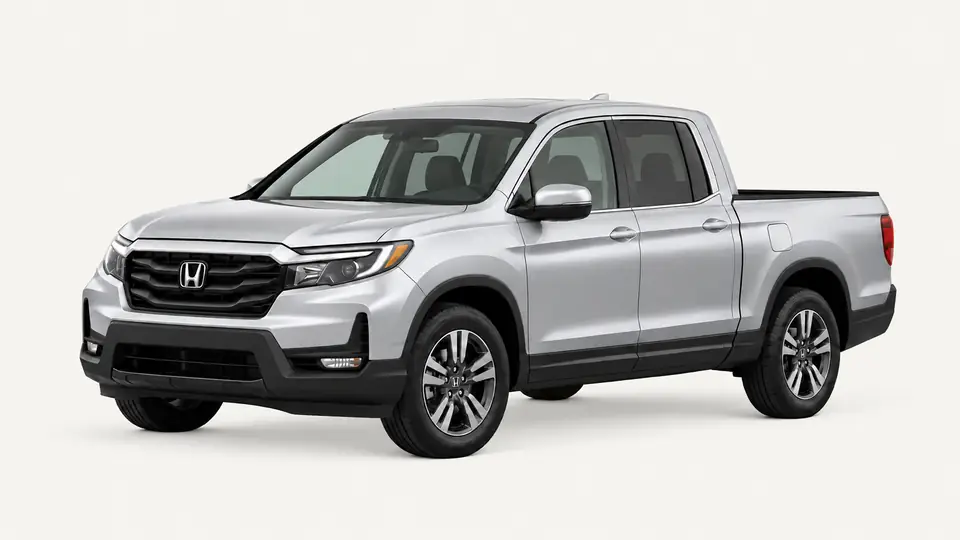
Should You Buy the 2019 Honda Ridgeline?
Only after careful checks. Our reliability score for the 2019 Honda Ridgeline is 64 out of 100, which rates Caution. Owners reported about 1.4 times as many problems as for the average car of the same age. It ranks 12th of the 17 Ridgeline years we score.
The most reported problem is the rearview camera, mostly stopped working (28 of 237 complaints). Owners also complain about engine failure and the transmission. 72 of the 237 complaints describe a serious outcome, such as a crash, a fire, an injury or stalling while driving.
It has 11 recalls. Honda also offers a warranty extension that may still apply, for a problem with the engine. NHTSA rates it 5 out of 5 stars overall in crash tests. For comparison, the 2018 scores 61 and the 2020 scores 61.
Before you buy, check that the recalls were done, ask a Honda dealer about warranty extension 21-010 and get an independent inspection. The full checklist is at the end of this page.
Pros
- No do-not-drive or park-outside recalls
- 5-star NHTSA overall crash rating
- 1 Honda warranty extension may cover repairs
Cons
- About 1.4 times the problems of the average car its age
- More complaints than average about major systems in the last two years
- Rearview camera: stopped working28 complaints
- Engine failure: failure or loss of drive19 complaints
How the 2019 Ridgeline Earned Its Score
Every model year starts at 100. Each part takes points away when this year has more problems than the average car of the same age. How we score
| Item | Vs average | Points lost |
|---|---|---|
| Starting score | 100 | |
| Serious problems72 complaints · average car: about 57 | 1.3× | −12 |
| Everyday problems122 complaints · average car: about 78 | 1.6× | −5 |
| Problems in the last two years52 complaints · average car: about 30 | 1.7× | −11 |
| Recalls11 recalls · average car: about 5.0 | 1.8× | −8 |
| Score | 64 |
Each part shows two counts: this year's so far, and what an average car would have at the same age. For complaints, that average car was made in the same number as this one. “Vs average” compares the two counts, but in our scoring system we first add a little to both, so a few complaints cannot swing the result. That is why it is not simply one count divided by the other. The last two years count only complaints about five systems: the engine and fuel system, transmission, brakes, steering, and airbags and seat belts.
What Owners Report
We read all 237 complaints filed with NHTSA for the 2019 Honda Ridgeline, one by one, and grouped them by the problem they describe. The most reported problems come first.
Rearview camera: stopped working
28 complaints (12%)
A feature that stopped working, damage and problems that come and go. 1 of these 28 complaints describes a serious outcome. Median mileage when it started: about 39,000 miles.
Engine failure: failure or loss of drive
19 complaints (8%)
Failure or loss of drive, unusual noises and reduced power or limp mode. 15 of these 19 complaints describe a serious outcome, most often a tow. Median mileage when it started: about 87,000 miles.
Transmission: harsh or delayed shifts
19 complaints (8%)
Harsh or delayed shifts, failure or loss of drive and surging. 10 of these 19 complaints describe a serious outcome, most often stalling or losing power while driving. In 6 complaints, the problem came back after a repair. Median mileage when it started: about 50,000 miles.
Hood: vibration or shudder
16 complaints (7%)
Vibration or shudder, parts breaking or coming apart and damage. In 5 complaints, the problem came back after a repair. Median mileage when it started: about 10,000 miles.
Brakes failure
12 complaints (5%)
A failure, loss of braking and the system acting on its own. 3 of these 12 complaints describe a serious outcome, most often loss of braking. In 3 complaints, the dealer could not find or fix the problem. Median mileage when it started: about 3,000 miles.
Fuel injector: fault code
10 complaints (4%)
A stored fault code, hesitation and a failure. 1 of these 10 complaints describes a serious outcome. Median mileage when it started: about 61,000 miles.
Fumes in cabin (cause not stated)
10 complaints (4%)
A bad smell. 1 of these 10 complaints describes a serious outcome: an injury. In 6 complaints, the dealer could not find or fix the problem. Median mileage when it started: about 10,000 miles.
Engine: unusual noises
7 complaints (3%)
Unusual noises, stalling and reduced power or limp mode. 3 of these 7 complaints describe a serious outcome, most often stalling or losing power while driving. In 3 complaints, the dealer could not find or fix the problem.
Torque converter: vibration or shudder
7 complaints (3%)
Vibration or shudder, a failure and hesitation. 1 of these 7 complaints describes a serious outcome.
Hood latch: not closing or latching
6 complaints (3%)
Not closing or latching, damage and a failure. 1 of these 6 complaints describes a serious outcome: loss of visibility.
Fuel pump: hesitation
5 complaints (2%)
Hesitation, damage and stalling. 1 of these 5 complaints describes a serious outcome: stalling or losing power while driving.
Stall (cause not stated)
5 complaints (2%)
Stalling. All 5 describe a serious outcome, most often stalling or losing power while driving. Median mileage when it started: about 49,000 miles.
Key fob failure
4 complaints (2%)
A failure that needed a new part and a feature that stopped working. 2 of these 4 complaints describe a serious outcome, most often a car that would not start.
Poor acceleration (cause not stated)
4 complaints (2%)
Hesitation and surging.
Unintended acceleration (cause not stated)
4 complaints (2%)
Sudden acceleration. All 4 describe a serious outcome, most often a crash. Median mileage when it started: about 20,000 miles.
Show 15 more problems
Automatic emergency braking: hard braking with nothing ahead
3 complaints (1%)
Hard braking with nothing ahead and the system not working when needed. 1 of these 3 complaints describes a serious outcome: a crash. Median mileage when it started: about 16,000 miles.
Instrument cluster: stopped working
3 complaints (1%)
A feature that stopped working, problems that come and go and wrong readings. Median mileage when it started: about 26,000 miles.
Loss of power (cause not stated)
3 complaints (1%)
A loss of power and reduced power or limp mode. All 3 describe a serious outcome, most often stalling or losing power while driving.
Sunroof glass (shattered): shattering or cracking
3 complaints (1%)
Shattering or cracking. 1 of these 3 complaints describes a serious outcome: an injury.
Tailgate: not opening or unlocking
3 complaints (1%)
Not opening or unlocking and not closing or latching.
Timing chain or camshaft failure
3 complaints (1%)
A failure and damage. 1 of these 3 complaints describes a serious outcome: stalling or losing power while driving.
AWD or rear differential: rust or corrosion
2 complaints (under 1%)
Rust or corrosion.
Cabin odor or mold: a bad smell
2 complaints (under 1%)
A bad smell.
Fuel system failure
2 complaints (under 1%)
A failure and warning lights.
Screen and audio: works on and off
2 complaints (under 1%)
Problems that come and go and the system acting on its own.
Mirrors: vibration or shudder
2 complaints (under 1%)
Vibration or shudder and a feature that stopped working.
Noise (cause not stated)
2 complaints (under 1%)
Unusual noises.
Cruise control: surging
2 complaints (under 1%)
Surging and a feature that stopped working. 1 of these 2 complaints describes a serious outcome.
Seat belts failure
2 complaints (under 1%)
A failure and locking up. 1 of these 2 complaints describes a serious outcome: a crash.
Wiring, fuses or body control module: damage
2 complaints (under 1%)
Damage and the system acting on its own.
Reported Once (32)
Show the 32 problems reported once
- Body seals (water leak): water leaking in
- Brake power assist: a hard pedal or less assist
- Several warning lights at once
- Engine (misfire codes): rough running or misfires
- Engine mounts: unusual noises
- Engine sensors or computer: damage
- Exhaust or catalytic converter: fault code
- Forward collision warning: the system not working when needed
- Frame or structure: rust or corrosion
- Frontal airbags: no deployment in a crash
- Fuel leak
- Headlights: stopped working
- High-pressure fuel pump: unusual noises
- In-bed trunk: a bad smell
- Interior trim: damage
- Parking transmission lights: stopped working
- Clock spring or cable reel: unusual noises
- Fire (cause not stated)
- Number 2 sensor: works on and off
- Problem not described (cause not stated)
- Smoke (cause not stated)
- Sun visor: sticking or stiffness
- Trailer hitch: parts breaking or coming apart
- Vehicle alarm: the system acting on its own
- Paint and rust: damage
- Piston rings: parts breaking or coming apart
- Seats: damage
- Side blind zone alert: stopped working
- Car not starting (cause not stated)
- Shifter or park: the car rolling away
- Vibration (cause not stated)
- Windows or locks or sunroof (operate by themselves): the system acting on its own
How the 2019 Honda Ridgeline Compares With Other Years
The other Ridgeline years of the 2nd generation, 2017 to 2026.
| Year | Rating | Score | Vs average | Per 10k cars | Recalls | Most reported problem |
|---|---|---|---|---|---|---|
| 2026 | Too new | – | – | 3.4 | 0 | Headlights: works on and off |
| 2025 | Provisional 54 | – | – | 18.8 | 2 | Auto idle stop system: the car not starting |
| 2024 | Caution | 62 | 2.2× | 17.9 | 1 | Headlights: works on and off |
| 2023 | Caution | 67 | 1.4× | 17.4 | 5 | Headlights: works on and off |
| 2022 | Caution | 65 | 1.7× | 28.0 | 3 | Headlights: works on and off |
| 2021 | Caution | 63 | 1.8× | 34.0 | 7 | Headlights: works on and off |
| 2020 | Caution | 61 | 2.0× | 45.4 | 8 | Rearview camera: stopped working |
| 2019 This year | Caution | 64 | 1.4× | 33.3 | 11 | Rearview camera: stopped working |
| 2018 | Caution | 61 | 2.2× | 68.7 | 7 | Rearview camera: stopped working |
| 2017 | Avoid | 58 | 2.2× | 66.7 | 8 | Rearview camera: stopped working |
2019 Honda Ridgeline Recalls
The 2019 Honda Ridgeline has 11 recalls. The most recent was issued in June 2026: “Rear Suspension Components May Fail.” A VIN check at NHTSA shows which are still open on a given car.
Rear Suspension Components May Fail
Failure of rear suspension components, such as the rear control arm, can cause a loss of vehicle handling and control, increasing the risk of a crash or injury.
NHTSA 26V365000Recall report (PDF)Issued Jun 4, 2026.
Air Bags May Deploy Unintentionally During a Crash
Air bags that deploy unintentionally during a crash increase the risk of injury.
NHTSA 26V332000Recall report (PDF)Owner letter (PDF)Issued May 21, 2026.
Fuel Pump May Fail, December 2023
Fuel pump failure can cause an engine stall while driving, increasing the risk of a crash.
NHTSA 23V858000Recall report (PDF)Owner letter (PDF)Issued Dec 18, 2023. By the second quarter of 2026, 73% of the cars in this recall had been fixed.
Engine Damage from Connecting Rod Bearing Wear
A damaged engine may run improperly or stall while driving, increasing the risk of a fire, crash, or injury.
NHTSA 23V751000Recall report (PDF)Owner letter (PDF)Issued Nov 13, 2023. By the fourth quarter of 2025, 75% of the cars in this recall had been fixed.
Rearview Camera May Fail
An inoperative rearview camera can reduce the driver's rear visibility, increasing the risk of a crash.
NHTSA 22V867000Recall report (PDF)Owner letter (PDF)Issued Nov 23, 2022. By the second quarter of 2026, 81% of the cars in this recall had been fixed.
Hood May Open While Driving
A hood that opens while driving can obstruct the driver's view and increase the risk of a crash.
NHTSA 21V932000Recall report (PDF)Owner letter (PDF)Issued Nov 29, 2021. By the fourth quarter of 2023, 87% of the cars in this recall had been fixed.
Show 5 more recalls
Fuel Pump May Fail, March 2021
Fuel pump failure can cause an engine stall while driving, increasing the risk of a crash.
NHTSA 21V215000Recall report (PDF)Owner letter (PDF)Issued Mar 25, 2021. By the first quarter of 2023, 90% of the cars in this recall had been fixed.
Timing Belt Teeth May Separate
Teeth separation from the timing belt may result in an engine stall, increasing the risk of crash.
NHTSA 19V298000Recall report (PDF)Owner letter (PDF)Issued Apr 12, 2019. By the third quarter of 2020, 94% of the cars in this recall had been fixed.
Fuel Pump Feed Port May Crack And Leak
A crack in the fuel pump feed port can allow pressurized fuel to leak out, increasing the risk of a fire.
NHTSA 19V053000Recall report (PDF)Owner letter (PDF)Issued Jan 24, 2019. By the second quarter of 2020, 93% of the cars in this recall had been fixed.
Pillar Mounting Holes Incorrect Size/FMVSS 214 226
In the event of a crash necessitating right side curtain air bag deployment, the clip may not hold the center pillar trim panel in position and it may potentially interfere with the curtain air bag deployment. In the event of a crash, if the curtain air bag does not deploy as intended, it can increase the risk of injury.
NHTSA 18V848000Recall report (PDF)Owner letter (PDF)Issued Nov 28, 2018. By the second quarter of 2020, 98% of the cars in this recall had been fixed.
SRS May Become Disabled Due to Manufacturing Error
The Supplemental Restraint System (SRS) control unit may have a manufacturing error, possibly resulting in the air bags or seatbelt pretensioners not deploying in the event of a crash. In the event of a crash, if the air bags or seatbelt pretensioners do not function as intended, there would be an increased risk of injury.
NHTSA 18V664000Recall report (PDF)Owner letter (PDF)Issued Sep 27, 2018. By the first quarter of 2020, 98% of the cars in this recall had been fixed.
2019 Honda Ridgeline Warranty Extensions and Programs
Honda has one warranty extension for the 2019 Honda Ridgeline, separate from its recalls. It is for a problem with the engine. Whether one applies to a car depends on its VIN, which a Honda dealer can check.
- Warranty extensionHonda 21-010
Check engine light: catalytic converter, misfire or fuel injector codes (without software update)
- The problem:
- The engine software can misread sensors as a worn catalytic converter. Debris can also wear or clog the fuel injectors. The check engine light comes on.
- The fix:
- A Honda dealer tests the engine cylinders and replaces the fuel injectors for free.
- Who qualifies:
- The check engine light must come on with a listed catalytic converter, misfire or air fuel fault. For a catalytic converter fault, the program does not apply if all cylinders pass the test. Coverage passes to later owners.
- Coverage:
- 10 years or 150,000 miles from the original purchase date, whichever comes first.
2019 Honda Ridgeline NHTSA Investigations
NHTSA has opened four investigations that cover the 2019 Honda Ridgeline. One is still open, two closed without a recall and one other has closed.
Whether the rear-view camera repair on Ridgelines will last
ClosedNHTSA's recall query, opened in June 2024, checked whether Honda's rear-view camera harness repair under recall 22V-867 would last on 2017-2019 Ridgelines. Parts recalled later under 24V-321 shared the repair parts' supplier and materials. Honda knew of 14 reports of replacement harnesses failing. In February 2025 NHTSA upgraded the case to engineering analysis EA25-003 for more testing.
NHTSA RQ24011Opening report (PDF)Closing report (PDF)Jun 26, 2024 to Feb 11, 2025
Engine failures outside the scope of an engine recall
Closed without a recallNHTSA's recall query tested whether Honda recall 23V-751 was wide enough. That recall covers 3.5-liter V6 engines with a crankshaft defect. The query covered 2018-2020 Odysseys, 2015-2020 Pilots and 2017-2019 Ridgelines. NHTSA found Honda had set the scope properly and closed the query in August 2025. It moved the complaints to PE25-008.
NHTSA RQ24013Opening report (PDF)Closing report (PDF)Nov 8, 2024 to Aug 20, 2025
Rear-view camera harness failures after the Ridgeline recall repair
Closed without a recallNHTSA's engineering analysis covered 2017-2019 Ridgelines repaired under recall 22V-867. It began after 14 reports of rear-view camera harness failures following the repair. An owner survey and inspections found no failures from harness damage. Durability tests indicated the part is not expected to fail within a reasonable vehicle life. NHTSA closed the case in September 2026 without further action.
NHTSA EA25003Opening report (PDF)Closing report (PDF)Feb 11, 2025 to Sep 18, 2026
Engine failures from connecting rod bearings in V6 models
Still openNHTSA's preliminary evaluation, opened in August 2025, covers 414 reports of connecting rod bearing failures in the 3.5-liter V6. It lists 2016-2020 Pilots, 2018-2020 Odysseys and 2017-2019 Ridgelines. These engines fall outside Honda recall 23V-751, and NHTSA saw no sign of the same crankshaft defect. The case is still open.
NHTSA PE25008Opening report (PDF)Open since Aug 20, 2025
NHTSA Crash Test Ratings
NHTSA 5-Star Safety Ratings for this model year. See the 2019 Ridgeline ratings on NHTSA.gov.
Pickup crew cab AWD and pickup crew cab FWD
Check Before You Buy
A checklist for the 2019 Ridgeline, from its 11 recalls, a Honda warranty extension that may still apply and the problems owners report most.
Confirm the Recalls Were Done
Ask the seller for proof that each of these recalls was repaired.
- Rear Suspension Components May Fail NHTSA 26V365000
- Air Bags May Deploy Unintentionally During a Crash NHTSA 26V332000
- Fuel Pump May Fail, December 2023 NHTSA 23V858000
- Engine Damage from Connecting Rod Bearing Wear NHTSA 23V751000
- Rearview Camera May Fail NHTSA 22V867000
- Look up the VIN at NHTSA to see all 11 recalls and which are still open.
Ask a Honda Dealer
Ask whether this warranty extension applies to this VIN, and whether the work was done.
- 21-010: check engine light: catalytic converter, misfire or fuel injector codes (without software update)
On the Test Drive
- Check the backup camera image when reversing.
- Accelerate gently from a stop and again at 20 to 40 mph. Shudder, slipping or harsh shifts are warning signs. Ask for the transmission fluid records.
- Brake firmly from a moderate speed. A soft, hard or pulsing pedal, or a brake warning light, is a warning sign.
Ask the Seller
Ask whether any of these were ever repaired, and ask to see the receipts.
- Rearview camera
- Engine failure
- Transmission
- Also ask for the service records, especially oil changes and transmission fluid changes.
Before You Pay
- Get an independent pre-purchase inspection from a mechanic you choose.
- Decode the VIN to confirm the model year, engine and trim.
- Check the title for salvage, flood or rebuilt branding.
What to do next