2016 Honda HR-V Reliability Report
NHTSA data as of Oct 15, 2026Published Oct 23, 2026
Ranks 4th of 9 HR-V years we score.
- Owner complaints
- 241
- 8 are recall notices
- Per 10,000 cars
- 19.1
- 122,230 made for the U.S.
- Vs the average car
- 0.66×
- same age, 1× is average
- Serious outcomes
- 99
- crash, fire, injury, stall or tow
- Recalls
- 2
- NHTSA crash rating
- 5★
- overall, out of 5
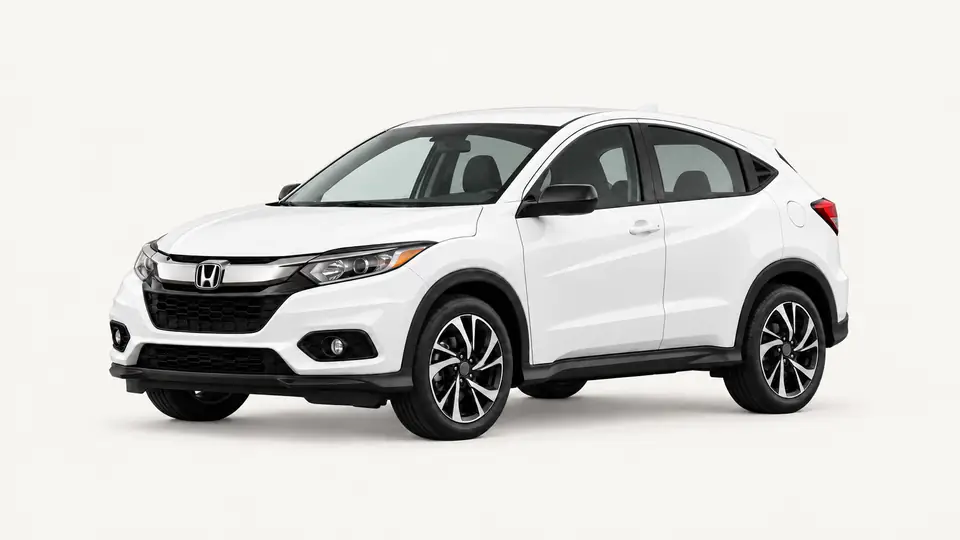
Should You Buy the 2016 Honda HR-V?
Yes, with the usual checks. Our reliability score for the 2016 Honda HR-V is 78 out of 100, which rates Good. Owners reported fewer problems than for the average car of the same age. It ranks 4th of the 9 HR-V years we score.
The most reported problem is the CVT, mostly failure or loss of drive (79 of 241 complaints). Owners also complain about the ignition or push-button start and the instrument cluster. 99 of the 241 complaints describe a serious outcome, such as a crash, a fire, an injury or stalling while driving.
It has 2 recalls. Honda also offers three warranty extensions that may still apply, for problems with the transmission, paint and keyless start. NHTSA rates it 5 out of 5 stars overall in crash tests. For comparison, the 2017 scores 80.
Before you buy, check that the recalls were done, ask a Honda dealer about warranty extension 21-047 and get an independent inspection. The full checklist is at the end of this page.
Pros
- Good reliability score of 78
- Fewer problems than the average car its age
- Recent complaints at or below average
- No do-not-drive or park-outside recalls
Cons
- CVT: failure or loss of drive79 complaints
- Ignition or push-button start failure23 complaints
- Instrument cluster: works on and off19 complaints
How the 2016 HR-V Earned Its Score
Every model year starts at 100. Each part takes points away when this year has more problems than the average car of the same age. How we score
| Item | Vs average | Points lost |
|---|---|---|
| Starting score | 100 | |
| Serious problems99 complaints · average car: about 149 | 0.67× | −9 |
| Everyday problems134 complaints · average car: about 214 | 0.63× | −3 |
| Problems in the last two years21 complaints · average car: about 40 | 0.54× | −6 |
| Recalls2 recalls · average car: about 5.9 | 0.52× | −4 |
| Score | 78 |
Each part shows two counts: this year's so far, and what an average car would have at the same age. For complaints, that average car was made in the same number as this one. “Vs average” compares the two counts, but in our scoring system we first add a little to both, so a few complaints cannot swing the result. That is why it is not simply one count divided by the other. The last two years count only complaints about five systems: the engine and fuel system, transmission, brakes, steering, and airbags and seat belts.
What Owners Report
We read all 241 complaints filed with NHTSA for the 2016 Honda HR-V, one by one, and grouped them by the problem they describe. The most reported problems come first. A complaint that describes more than one problem is counted under each, so the counts add up to more than 241.
CVT: failure or loss of drive
79 complaints (33%)
Failure or loss of drive, reduced power or limp mode and parts breaking or coming apart. 70 of these 79 complaints describe a serious outcome, most often stalling or losing power while driving. In 7 complaints, the problem came back after a repair. Median mileage when it started: about 90,000 miles.
Ignition or push-button start failure
23 complaints (10%)
A failure that needed a new part, hard starting and problems that come and go. 16 of these 23 complaints describe a serious outcome, most often a car that would not start. Median mileage when it started: about 50,000 miles.
Instrument cluster: works on and off
19 complaints (8%)
Problems that come and go and a feature that stopped working. Median mileage when it started: about 18,000 miles.
Brakes: loss of braking
15 complaints (6%)
Loss of braking, early wear and unusual noises. 7 of these 15 complaints describe a serious outcome, most often loss of braking. Median mileage when it started: about 22,000 miles.
Paint and rust: peeling
13 complaints (5%)
Peeling. Median mileage when it started: about 66,000 miles.
Body seals (water leak): water leaking in
8 complaints (3%)
Water leaking in. Median mileage when it started: about 52,000 miles.
Taillights or brake lights: water leaking in
8 complaints (3%)
Water leaking in and a feature that stopped working. Median mileage when it started: about 45,000 miles.
Wiring, fuses or body control module: damage
8 complaints (3%)
Damage, loose and a failure. 2 of these 8 complaints describe a serious outcome, most often a car that would not start. Median mileage when it started: about 52,000 miles.
Airbags: no deployment in a crash
7 complaints (3%)
No deployment in a crash. 1 of these 7 complaints describes a serious outcome: a crash. Median mileage when it started: about 41,000 miles.
Parking brake: warning lights
7 complaints (3%)
Warning lights, a failure and a feature that stopped working. Median mileage when it started: about 58,000 miles.
ABS: warning lights
5 complaints (2%)
Warning lights, the system not working when needed and not releasing. 3 of these 5 complaints describe a serious outcome, most often a crash.
Sunroof glass (shattered): shattering or cracking
5 complaints (2%)
Shattering or cracking. 1 of these 5 complaints describes a serious outcome. Median mileage when it started: about 11,000 miles.
Key fob: warning lights
4 complaints (2%)
Warning lights, problems that come and go and a failure that needed a new part.
Unintended acceleration (cause not stated)
4 complaints (2%)
Sudden acceleration and surging. 2 of these 4 complaints describe a serious outcome, most often sudden acceleration or braking.
12V battery failure
3 complaints (1%)
A failure and a leak. Median mileage when it started: about 54,000 miles.
Show 18 more problems
A/C: weak cooling
3 complaints (1%)
Weak cooling, a leak and a feature that stopped working. Median mileage when it started: about 53,000 miles.
Seats: overheating
3 complaints (1%)
Overheating and damage. Median mileage when it started: about 34,000 miles.
Car not starting (cause not stated)
3 complaints (1%)
The car not starting and hard starting. All 3 describe a serious outcome, most often a car that would not start.
Steering: locking up
3 complaints (1%)
Locking up and sticking or stiffness. 2 of these 3 complaints describe a serious outcome, most often loss of steering control. Median mileage when it started: about 14,000 miles.
Struts or shocks: parts breaking or coming apart
3 complaints (1%)
Parts breaking or coming apart, a failure that needed a new part and a leak.
Tires: parts breaking or coming apart
3 complaints (1%)
Parts breaking or coming apart and a leak. 2 of these 3 complaints describe a serious outcome, most often a crash.
AWD or rear differential failure
2 complaints (under 1%)
A failure that needed a new part.
EVAP system failure
2 complaints (under 1%)
A failure that needed a new part.
Airbag warning light
2 complaints (under 1%)
Warning lights.
Alternator or charging: a loss of power
2 complaints (under 1%)
A loss of power and a failure that needed a new part. Both describe a serious outcome, most often stalling or losing power while driving.
Cabin odor or mold: mold growth
2 complaints (under 1%)
Mold growth.
Defroster: works on and off
2 complaints (under 1%)
Problems that come and go and a feature that stopped working.
Engine: a fire
2 complaints (under 1%)
A fire and surging. Both describe a serious outcome, most often a fire.
Screen and audio: works on and off
2 complaints (under 1%)
Problems that come and go.
Noise (cause not stated)
2 complaints (under 1%)
Unusual noises.
Door lock actuators failure
2 complaints (under 1%)
A failure that needed a new part and problems that come and go.
Seat belts: parts breaking or coming apart
2 complaints (under 1%)
Parts breaking or coming apart and not closing or latching.
Tire pressure monitoring: warning lights
2 complaints (under 1%)
Warning lights.
Reported Once (34)
Show the 34 problems reported once
- Brake calipers failure
- Check engine light (cause not stated)
- Climate controls: wrong readings
- Control module (unspecified): communication conflicts
- CV axles: vibration or shudder
- Engine air intake: stalling
- Engine oil leak
- Engine sensors or computer: fault code
- Exhaust or catalytic converter failure
- Frontal airbags: deployment with no crash
- Fuel pump failure
- Fuel system: a bad smell
- Heater: stopped working
- Loss of power (cause not stated)
- Passenger airbag sensor: works on and off
- Accelerator pedal: sticking or stiffness
- Battery sensor failure
- Cruise control: works on and off
- Door controls: stopped working
- Hatch interior light: stopped working
- Windshield washer nozzle: freezes
- Poor acceleration (cause not stated)
- Power liftgate: won't stay up
- Rearview camera: works on and off
- Stability control (VSA) failure
- Transmission computer: fault code
- Transmission fluid leak
- Shifter or park: not releasing
- Vibration (cause not stated)
- Warning lights (cause not stated)
- Wheel bearings failure
- Wheel rim: vibration or shudder
- Windshield: shattering or cracking
- Windshield wipers: works on and off
How the 2016 Honda HR-V Compares With Other Years
The other HR-V years of the 1st generation, 2016 to 2022, and the year just after it.
| Year | Rating | Score | Vs average | Per 10k cars | Recalls | Most reported problem |
|---|---|---|---|---|---|---|
| 2023 | Caution | 62 | 4.4× | 67.6 | 3 | Rear window glass: shattering or cracking |
| 2022 | Good | 75 | 0.65× | 7.1 | 3 | CVT failure |
| 2021 | Excellent | 84 | 0.31× | 5.1 | 4 | Instrument cluster: works on and off |
| 2020 | Good | 74 | 0.61× | 11.6 | 5 | Instrument cluster: works on and off |
| 2019 | Good | 76 | 0.59× | 16.2 | 7 | Instrument cluster: works on and off |
| 2018 | Good | 79 | 0.53× | 14.3 | 3 | Instrument cluster: works on and off |
| 2017 | Excellent | 80 | 0.57× | 14.4 | 0 | CVT: failure or loss of drive |
| 2016 This year | Good | 78 | 0.66× | 19.1 | 2 | CVT: failure or loss of drive |
2016 Honda HR-V Recalls
Two recalls cover the 2016 Honda HR-V. The most recent was issued in November 2018: “Coating on Rear Brake Caliper Pistons/FMVSS 135.” A VIN check at NHTSA shows which are still open on a given car.
Coating on Rear Brake Caliper Pistons/FMVSS 135
The rear brake caliper pistons may have an insufficient coating, causing gas pockets to form, reducing brake performance. A reduction of braking performance increases the risk of a crash.
NHTSA 18V777000Recall report (PDF)Owner letter (PDF)Issued Nov 1, 2018. By the first quarter of 2020, 92% of the cars in this recall had been fixed.
Missing Tire Placard/FMVSS 110
If the tire placard is missing the driver or owner may not know at what pressure to inflate the tires, resulting in over or under tire inflation which potentially increases the risk of a tire failure and crash.
NHTSA 15V472000Recall report (PDF)Owner letter (PDF)Issued Jul 28, 2015. By the fourth quarter of 2016, 77% of the cars in this recall had been fixed.
2016 Honda HR-V Warranty Extensions and Programs
Honda has three warranty extensions and one service campaign for the 2016 Honda HR-V, separate from its recalls. They are for problems with the transmission, paint and keyless start. Whether one applies to a car depends on its VIN, which a Honda dealer can check.
- Warranty extensionHonda 21-047
CVT replacement for early belt wear
- The problem:
- The CVT drive belt can wear out early. The car may make noise, turn on the check engine light or, in very rare cases, lose drive power.
- The fix:
- A Honda dealer replaces the CVT and its torque converter for free.
- Who qualifies:
- Only HR-Vs with the CVT qualify. The 21-046 software update and CVT inspection must be done first. The CVT is replaced only if it fails that inspection. The VIN must show as eligible.
- Coverage:
- 7 years or 150,000 miles from the original purchase date, whichever comes first.
- Warranty extensionHonda 19-064
White Orchid Pearl or Bellanova White paint peeling
- The problem:
- The factory White Orchid Pearl paint, also called Bellanova White, can peel off. It can be too thin in places such as the roof and around the tailgate.
- The fix:
- A Honda dealer has a certified body shop repaint the peeling panels for free. Owners who paid for this repair before may be repaid.
- Who qualifies:
- Only White Orchid Pearl or Bellanova White cars qualify. Peeling must come from the factory paint, not bird droppings, sap or crashes. Honda must approve each repair first. Coverage passes to later owners. Salvage or branded titles are not covered.
- Coverage:
- 7 years from the original purchase date, with no mileage limit.
- Warranty extensionHonda 20-116
Keyless start system error, start/stop button
- The problem:
- The engine start/stop button can fail. The car may not start on the first press and the display shows a keyless start system error.
- The fix:
- A Honda dealer replaces the engine start/stop switch for free. Owners who paid for this repair before may be repaid.
- Who qualifies:
- Only EX and EX-L trims qualify. The car must not start on the first press and must show the keyless start error. The switch is replaced only if it has failed. The VIN must show as eligible.
- Coverage:
- 9 years or 125,000 miles from the original purchase date, whichever comes first.
- Service campaignHonda 21-046
CVT belt software update and inspection
- The problem:
- A wrong value in the engine control software can put too much pressure on the CVT belt. The belt can then break, and the car may not move.
- The fix:
- A Honda dealer updates the software and inspects the CVT for free. If the CVT fails the inspection, it is replaced under program 21-047.
- Who qualifies:
- Only HR-Vs with the CVT qualify. The VIN must show as eligible. Honda dealers must repair affected new and used cars before selling them.
- Coverage:
- The software update and CVT inspection are free. No end date is given. Ask a Honda dealer for the exact terms.
NHTSA Crash Test Ratings
NHTSA 5-Star Safety Ratings for this model year. See the 2016 HR-V ratings on NHTSA.gov.
SUV AWD and SUV FWD
Check Before You Buy
A checklist for the 2016 HR-V, from its two recalls, three Honda warranty extensions that may still apply and the problems owners report most.
Confirm the Recalls Were Done
Ask the seller for proof that each of these recalls was repaired.
- Coating on Rear Brake Caliper Pistons/FMVSS 135 NHTSA 18V777000
- Missing Tire Placard/FMVSS 110 NHTSA 15V472000
Ask a Honda Dealer
Ask whether each of these warranty extensions applies to this VIN, and whether the work was done.
- 21-047: CVT replacement for early belt wear
- 19-064: White Orchid Pearl or Bellanova White paint peeling
- 20-116: keyless start system error, start/stop button
On the Test Drive
- Accelerate gently from a stop and again at 20 to 40 mph. Shudder, slipping or harsh shifts are warning signs. Ask for the transmission fluid records.
- Test the screen, audio and phone connection for freezing or rebooting.
- Brake firmly from a moderate speed. A soft, hard or pulsing pedal, or a brake warning light, is a warning sign.
Ask the Seller
Ask whether any of these were ever repaired, and ask to see the receipts.
- CVT
- Ignition or push-button start
- Instrument cluster
- Also ask for the service records, especially oil changes and transmission fluid changes.
Before You Pay
- Get an independent pre-purchase inspection from a mechanic you choose.
- Decode the VIN to confirm the model year, engine and trim.
- Check the title for salvage, flood or rebuilt branding.
What to do next