Skip to content
CarReliabilityRankings.com
Menu

Honda HR-V Reliability Rankings: Years to Avoid and Best Years to Buy

NHTSA data as of Oct 15, 2026Published Oct 23, 2026

According to our reliability score system, the best Honda HR-V years to buy are the 2017 and 2021. Both come from the 1st generation, model years 2016 to 2022.

No HR-V year rates Avoid, but the 2023 needs a careful look. Owners of the 2023 most often report the rear window glass, mostly shattering or cracking.

If you want a newer HR-V, look at the 2024, which rates Good. Be careful with the 2023. The 2025 to 2027 are too new for a final score.

For an older HR-V, made before 2023, the 2016 to 2022 rate Good or Excellent.

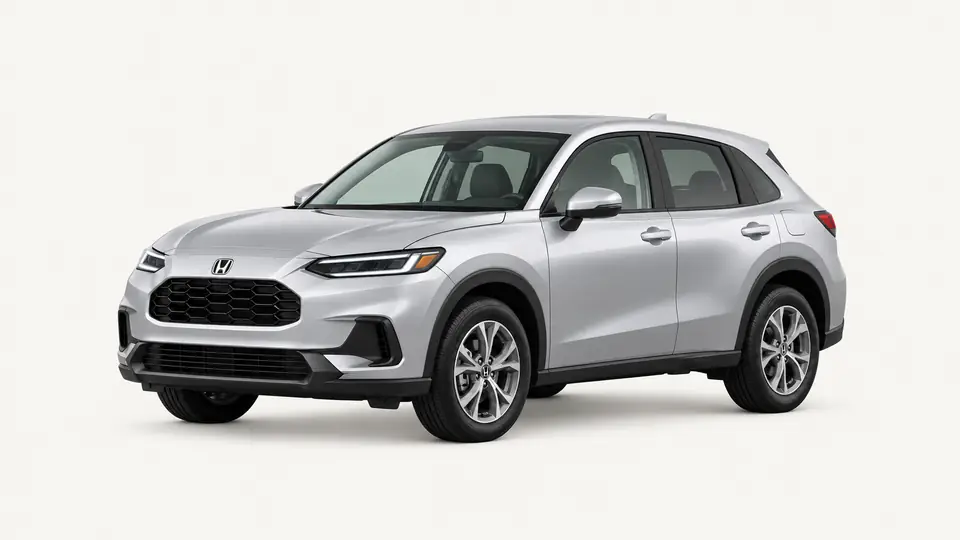
Honda HR-V, 2nd generation (2023–2027)
75
Good
Model score, all years
12
Model years tracked
1,857
Owner complaints
13
Recalls, all years
Excellent2 years
Caution1 year
Avoid0 years

No HR-V year is rated Avoid.

Not rated yet: 2025, 2026, 2027, too new for a final score.

Honda HR-V reliability score by model yearScore out of 100 · 70 = average for a car of the same age
06070801002016: 77.6 (Good)78'162017: 79.7 (Excellent)80'172018: 78.5 (Good)79'182019: 76.0 (Good)76'192020: 73.9 (Good)74'202021: 83.8 (Excellent)84'212022: 75.4 (Good)75'222023: 62.2 (Caution)62'232024: 74.4 (Good)74'242025: provisional 81, range 77 to 84~81'252026: not scored yetnew'262027: not scored yetnew'27
Excellent 80+Good 70–79Caution 60–69Avoid under 60 Provisional, with 80% range 70 = average for a car of the same age

Best Years to Buy a Honda HR-V

Two HR-V years rate Excellent, scoring 80 or higher. The 2021 leads with 84.

Honda HR-V, 1st generation (2016–2022)

2021 HR-V

1st generation

84
Excellent

Most reported problems

  • Instrument cluster: works on and off17%
  • CVT failure11%
  • Automatic emergency braking: hard braking with nothing ahead6%
  • Brakes: unusual noises5%
  • Steering: loss of steering control5%
  • Unintended acceleration (cause not stated)5%
Per 10k cars
5.1
Complaints
63
Recalls
4
Full 2021 report →
Honda HR-V, 1st generation (2016–2022)

2017 HR-V

1st generation

80
Excellent

Most reported problems

  • CVT: failure or loss of drive28%
  • Instrument cluster: works on and off11%
  • Paint and rust: paint peeling9%
  • Body seals (water leak): water leaking in7%
  • Unintended acceleration (cause not stated)5%
  • Airbags: no deployment in a crash4%
Per 10k cars
14.4
Complaints
123
Recalls
0
Full 2017 report →

Also rated Good: 2016, 2018–2020, 2022, 2024.

Honda HR-V Years to Avoid

No HR-V year rates Avoid. The 2023 is the only HR-V year rated Caution, with a score of 62.

Honda HR-V, 2nd generation (2023–2027)

2023 HR-V

2nd generation

62
Caution

Most reported problems

  • Rear window glass: shattering or cracking83%
  • Steering: sticking or stiffness11%
  • Brakes: unusual noisesunder 1%
  • Fumes in cabin (cause not stated)under 1%
  • Noise (cause not stated)under 1%
  • Defroster: overheatingunder 1%
Per 10k cars
67.6
Complaints
687
Recalls
3
Full 2023 report →

The Newest HR-V Years: 2025–2027

A final score needs 36 months of complaints. Until then we show what we know, and a provisional reading once there is enough data. All three are the same generation as the 2024, which scored 74 (Good).

Honda HR-V, 2nd generation (2023–2027)

2025 HR-V

Provisional

Provisional score 81 (likely 77 to 84), in the better third of 2025 models so far. Final score at 36 months.

What we know so far →
Honda HR-V, 2nd generation (2023–2027)

2026 HR-V

Too new

18 complaints and 0 recalls so far. First provisional score expected around July 2027.

What we know so far →
Honda HR-V, 2nd generation (2023–2027)

2027 HR-V

Too new

3 complaints and 0 recalls so far. First provisional score expected around July 2028.

What we know so far →

Honda HR-V Reliability by Year

All model years, newest first. Tap a year for its full report, with the problems owners report, recalls, Honda programs and crash ratings.

YearGenerationRatingScoreVs averageComplaintsPer 10k carsRecalls
20272nd generationToo new––3–0Report
20262nd generationToo new––181.40Report
20252nd generationProvisional 81––472.51Report
20242nd generationGood740.64×1095.64Report
20232nd generation(first year)Caution624.4×68767.63Report
20221st generationGood750.65×887.13Report
20211st generationExcellent840.31×635.14Report
20201st generationGood740.61×8411.65Report
20191st generationGood760.59×23616.27Report
20181st generationGood790.53×15814.33Report
20171st generationExcellent800.57×12314.40Report
20161st generationGood780.66×24119.12Report

Vs average: how this year's complaint rate compares with the average car of the same age. 1× is average, 2× is twice as many. Per 10k cars: complaints so far for every 10,000 cars Honda made for the U.S. that model year. The complaint count also includes owners who wrote in only about a recall notice, with no problem to report. The score leaves those out. Generations follow Honda's own model history.

How We Score Each Model Year

1

Count What Owners Report

Every complaint filed with NHTSA for the model year, plus its recalls. Recall-notice filings with no fault are left out.

2

Adjust for How Many Were Made

A popular car gets more complaints just because there are more of them. We divide by the number Honda made for that model year and compare with the average car of the same age.

3

Turn It Into a Score

70 is average. Twice the average rate of complaints costs 10 points, half the rate adds 10. Serious problems count more than everyday ones.

Read the full method →

What to Do Next