2019 Honda Fit Reliability Report
NHTSA data as of Oct 15, 2026Published Oct 23, 2026
Ranks 11th of 13 Fit years we score.
- Owner complaints
- 136
- 14 are recall notices
- Per 10,000 cars
- 23.9
- 50,946 made for the U.S.
- Vs the average car
- 0.84×
- same age, 1× is average
- Serious outcomes
- 31
- crash, fire, injury, stall or tow
- Recalls
- 6
- NHTSA crash rating
- 5★
- overall, out of 5
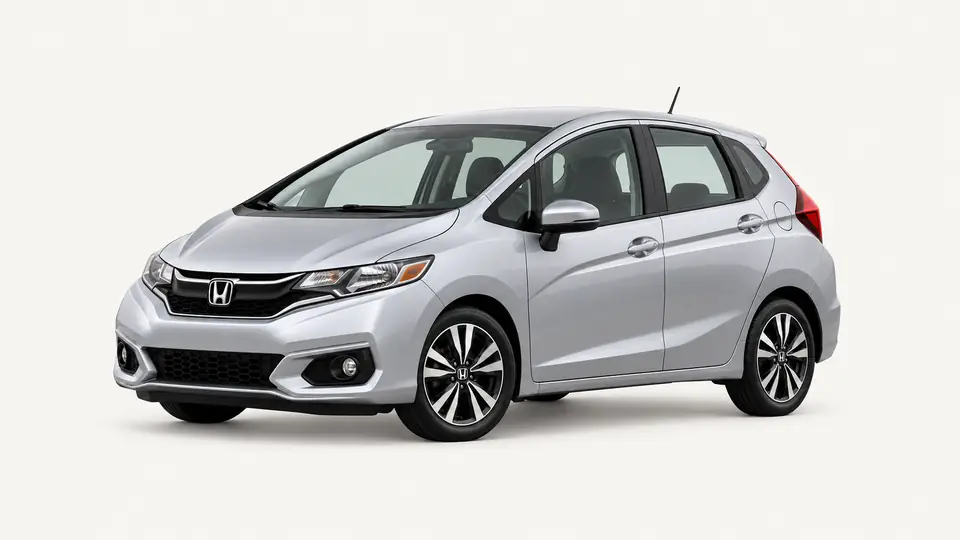
Should You Buy the 2019 Honda Fit?
Yes, with the usual checks. Our reliability score for the 2019 Honda Fit is 73 out of 100, which rates Good. Owners reported fewer problems than for the average car of the same age. It ranks 11th of the 13 Fit years we score.
The most reported problem is the instrument cluster, mostly works on and off (42 of 136 complaints). Owners also complain about the fuel injectors and dashboard warning lights. 31 of the 136 complaints describe a serious outcome, such as a crash, a fire, an injury or stalling while driving.
It has 6 recalls. Honda also offers a warranty extension that may still apply, for a problem with the engine. NHTSA rates it 5 out of 5 stars overall in crash tests. For comparison, the 2018 scores 73 and the 2020 scores 82.
Before you buy, check that the recalls were done, ask a Honda dealer about warranty extension 23-042 and get an independent inspection. The full checklist is at the end of this page.
Pros
- Good reliability score of 73
- Fewer problems than the average car its age
- Recent complaints at or below average
- No do-not-drive or park-outside recalls
Cons
- Instrument cluster: works on and off42 complaints
- Fuel injector failure15 complaints
- Several warning lights at once10 complaints
How the 2019 Fit Earned Its Score
Every model year starts at 100. Each part takes points away when this year has more problems than the average car of the same age. How we score
| Item | Vs average | Points lost |
|---|---|---|
| Starting score | 100 | |
| Serious problems31 complaints · average car: about 50 | 0.63× | −9 |
| Everyday problems91 complaints · average car: about 68 | 1.3× | −5 |
| Problems in the last two years16 complaints · average car: about 26 | 0.63× | −7 |
| Recalls6 recalls · average car: about 5.0 | 1.1× | −6 |
| Score | 73 |
Each part shows two counts: this year's so far, and what an average car would have at the same age. For complaints, that average car was made in the same number as this one. “Vs average” compares the two counts, but in our scoring system we first add a little to both, so a few complaints cannot swing the result. That is why it is not simply one count divided by the other. The last two years count only complaints about five systems: the engine and fuel system, transmission, brakes, steering, and airbags and seat belts.
What Owners Report
We read all 136 complaints filed with NHTSA for the 2019 Honda Fit, one by one, and grouped them by the problem they describe. The most reported problems come first. A complaint that describes more than one problem is counted under each, so the counts add up to more than 136.
Instrument cluster: works on and off
42 complaints (31%)
Problems that come and go, a feature that stopped working and wrong readings.
Fuel injector failure
15 complaints (11%)
A failure, rough running or misfires and stalling. 1 of these 15 complaints describes a serious outcome: stalling or losing power while driving. Median mileage when it started: about 41,000 miles.
Several warning lights at once
10 complaints (7%)
Warning lights. 2 of these 10 complaints describe a serious outcome, most often a tow. Median mileage when it started: about 34,000 miles.
Lane keeping assist: loss of steering control
7 complaints (5%)
Loss of steering control, problems that come and go and the system not working when needed. Median mileage when it started: about 10,000 miles.
Engine carbon buildup: rough running or misfires
6 complaints (4%)
Rough running or misfires. 1 of these 6 complaints describes a serious outcome. Median mileage when it started: about 18,000 miles.
Unintended acceleration (cause not stated)
6 complaints (4%)
Sudden acceleration. 3 of these 6 complaints describe a serious outcome, most often a crash. Median mileage when it started: about 3,000 miles.
Paint and rust: damage
5 complaints (4%)
Damage and rust or corrosion.
Airbags: no deployment in a crash
4 complaints (3%)
No deployment in a crash and deployment injury. Median mileage when it started: about 10,000 miles.
Automatic emergency braking: hard braking with nothing ahead
4 complaints (3%)
Hard braking with nothing ahead, the system not working when needed and problems that come and go. Median mileage when it started: about 1,000 miles.
Engine (misfire codes): rough running or misfires
4 complaints (3%)
Rough running or misfires.
12V battery: damage
3 complaints (2%)
Damage, a failure that needed a new part and a loss of power. 1 of these 3 complaints describes a serious outcome: stalling or losing power while driving.
Fuel pump: the car not starting
3 complaints (2%)
The car not starting and a loss of power. All 3 describe a serious outcome, most often a car that would not start.
Driver-assist camera and radar: stopped working
3 complaints (2%)
A feature that stopped working.
Car not starting (cause not stated)
3 complaints (2%)
The car not starting and hard starting. 1 of these 3 complaints describes a serious outcome: a car that would not start.
Steering: pulling or wandering
3 complaints (2%)
Pulling or wandering, warm to touch and loss of steering control. Median mileage when it started: about 20,000 miles.
Show 13 more problems
EVAP system: damage
2 complaints (1%)
Damage and a failure that needed a new part.
Brakes: loss of braking
2 complaints (1%)
Loss of braking.
Check engine light (cause not stated)
2 complaints (1%)
Warning lights and a stored fault code.
Fuel system: warning lights
2 complaints (1%)
Warning lights and a bad smell.
Headlights: works on and off
2 complaints (1%)
Problems that come and go and a feature that stopped working.
Screen and audio: works on and off
2 complaints (1%)
Problems that come and go.
Problem not described (cause not stated)
2 complaints (1%)
Vehicle alarm: the system acting on its own
2 complaints (1%)
The system acting on its own.
Phone and navigation: the system acting on its own
2 complaints (1%)
The system acting on its own and a feature that stopped working.
Door lock actuators: works on and off
2 complaints (1%)
Problems that come and go and a failure.
Road departure mitigation: the system not working when needed
2 complaints (1%)
The system not working when needed and problems that come and go.
Stall (cause not stated)
2 complaints (1%)
Stalling.
Tire pressure monitoring: warning lights
2 complaints (1%)
Warning lights.
Reported Once (14)
Show the 14 problems reported once
- Adaptive cruise control: works on and off
- Uneven tire wear: early wear
- Alternator or charging: works on and off
- Battery drain: draining the battery
- Exhaust or catalytic converter failure
- Horn: works on and off
- Key fob failure
- Mirrors: shattering or cracking
- Oil drain plug: a leak
- Body mold: damage
- Engine splash shield: parts breaking or coming apart
- Poor acceleration (cause not stated)
- Seat belts: early wear
- Seats: damage
How the 2019 Honda Fit Compares With Other Years
The other Fit years of the 3rd generation, 2015 to 2020.
| Year | Rating | Score | Vs average | Per 10k cars | Recalls | Most reported problem |
|---|---|---|---|---|---|---|
| 2020 | Excellent | 82 | 0.38× | 10.3 | 4 | Instrument cluster: works on and off |
| 2019 This year | Good | 73 | 0.84× | 23.9 | 6 | Instrument cluster: works on and off |
| 2018 | Good | 73 | 0.84× | 29.5 | 4 | Instrument cluster: works on and off |
| 2017 | Excellent | 88 | 0.31× | 10.6 | 0 | Instrument cluster: works on and off |
| 2016 | Excellent | 86 | 0.46× | 16.8 | 1 | Instrument cluster: works on and off |
| 2015 | Good | 74 | 0.88× | 32.7 | 4 | Instrument cluster: works on and off |
2019 Honda Fit Recalls
Six recalls cover the 2019 Honda Fit. The most recent was issued in May 2026: “Air Bags May Deploy Unintentionally During a Crash.” A VIN check at NHTSA shows which are still open on a given car.
Air Bags May Deploy Unintentionally During a Crash
Air bags that deploy unintentionally during a crash increase the risk of injury.
NHTSA 26V332000Recall report (PDF)Owner letter (PDF)Issued May 21, 2026.
Inoperative Rearview Camera Display/FMVSS 111, May 2024
An inoperative rearview camera display can reduce the driver's rear visibility, increasing the risk of a crash.
NHTSA 24V384000Recall report (PDF)Owner letter (PDF)Issued May 31, 2024. By the second quarter of 2026, 68% of the cars in this recall had been fixed.
Fuel Pump May Fail, December 2023
Fuel pump failure can cause an engine stall while driving, increasing the risk of a crash.
NHTSA 23V858000Recall report (PDF)Owner letter (PDF)Issued Dec 18, 2023. By the second quarter of 2026, 73% of the cars in this recall had been fixed.
Inoperative Rearview Camera Display/FMVSS 111, February 2023
An inoperative rearview camera display can reduce the driver's rear visibility, increasing the risk of a crash.
NHTSA 23V046000Recall report (PDF)Owner letter (PDF)Issued Feb 2, 2023. By the fourth quarter of 2024, 70% of the cars in this recall had been fixed.
Fuel Pump May Fail, March 2021
Fuel pump failure can cause an engine stall while driving, increasing the risk of a crash.
NHTSA 21V215000Recall report (PDF)Owner letter (PDF)Issued Mar 25, 2021. By the first quarter of 2023, 90% of the cars in this recall had been fixed.
Fuel Pump May Fail, May 2020
If the fuel pump fails, the engine can stall while driving, increasing the risk of a crash.
NHTSA 20V314000Recall report (PDF)Owner letter (PDF)Issued May 28, 2020. By the second quarter of 2022, 91% of the cars in this recall had been fixed.
2019 Honda Fit Warranty Extensions and Programs
Honda has one warranty extension for the 2019 Honda Fit, separate from its recalls. It is for a problem with the engine. Whether one applies to a car depends on its VIN, which a Honda dealer can check.
- Warranty extensionHonda 23-042
Engine misfire from carbon on intake valves
- The problem:
- Carbon can build up on the intake valves. Together with the engine software settings, this can make the engine misfire.
- The fix:
- A Honda dealer updates the engine software and cleans the carbon off the intake valves for free.
- Who qualifies:
- Only Fits with the CVT qualify. The car needs a stored misfire fault from carbon buildup on the intake valves. The VIN must show as eligible.
- Coverage:
- 10 years or 150,000 miles from the original purchase date, whichever comes first.
NHTSA Crash Test Ratings
NHTSA 5-Star Safety Ratings for this model year. See the 2019 Fit ratings on NHTSA.gov.
5-door hatchback FWD
Check Before You Buy
A checklist for the 2019 Fit, from its six recalls, a Honda warranty extension that may still apply and the problems owners report most.
Confirm the Recalls Were Done
Ask the seller for proof that each of these recalls was repaired.
- Air Bags May Deploy Unintentionally During a Crash NHTSA 26V332000
- Inoperative Rearview Camera Display/FMVSS 111, May 2024 NHTSA 24V384000
- Fuel Pump May Fail, December 2023 NHTSA 23V858000
- Inoperative Rearview Camera Display/FMVSS 111, February 2023 NHTSA 23V046000
- Fuel Pump May Fail, March 2021 NHTSA 21V215000
- Look up the VIN at NHTSA to see all 6 recalls and which are still open.
Ask a Honda Dealer
Ask whether this warranty extension applies to this VIN, and whether the work was done.
- 23-042: engine misfire from carbon on intake valves
On the Test Drive
- Test the screen, audio and phone connection for freezing or rebooting.
- Watch for sudden braking or steering with nothing ahead, and ask whether the driver-assist software updates were done.
Ask the Seller
Ask whether any of these were ever repaired, and ask to see the receipts.
- Instrument cluster
- Fuel injectors
- Dashboard warning lights
- Also ask for the service records, especially oil changes.
Before You Pay
- Get an independent pre-purchase inspection from a mechanic you choose.
- Decode the VIN to confirm the model year, engine and trim.
- Check the title for salvage, flood or rebuilt branding.
What to do next