2017 Honda Civic Reliability Report
NHTSA data as of Sep 17, 2026Published Oct 15, 2026
Ranks 11th of 25 Civic years we score.
- Owner complaints
- 597
- 38 are recall notices
- Per 10,000 cars
- 14.7
- 379,668 made for the U.S.
- Vs the average car
- 0.42×
- same age, 1× is average
- Serious outcomes
- 133
- crash, fire, injury, stall or tow
- Recalls
- 6
- NHTSA crash rating
- 5★
- overall, out of 5
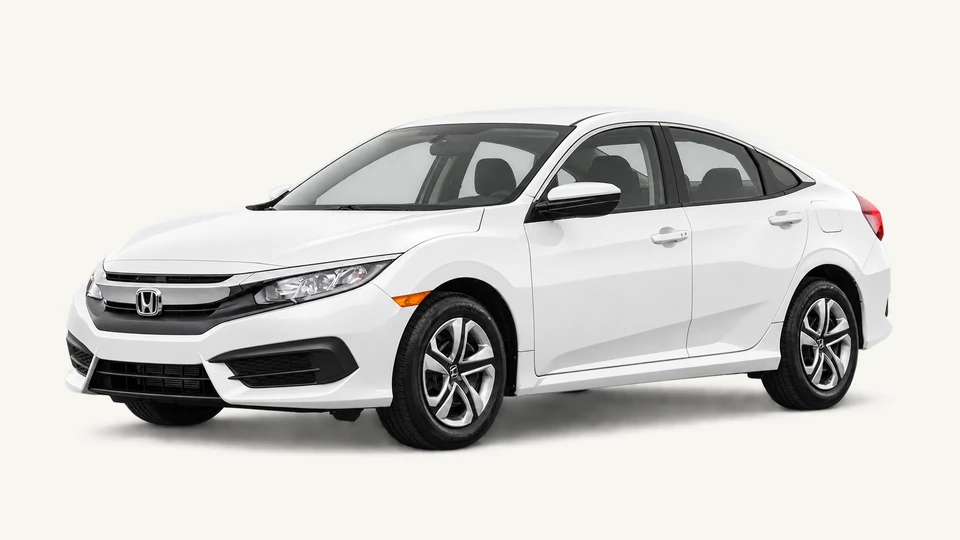
Should You Buy the 2017 Honda Civic?
Yes, with the usual checks. Our reliability score for the 2017 Honda Civic is 79 out of 100, which rates Good. Owners reported about half as many problems as for the average car of the same age. It ranks 11th of the 25 Civic years we score.
The most reported problem is the steering, mostly sticking or stiffness (164 of 597 complaints). Owners also complain about the A/C and the A/C condenser. 133 of the 597 complaints describe a serious outcome, such as a crash, a fire, an injury or stalling while driving.
It has 6 recalls. Honda also offers 3 warranty extensions that may still apply, for a/C condenser leaks and a/C condenser leaks. NHTSA rates it 5 out of 5 stars overall in crash tests. For comparison, the 2016 scores 71 and the 2018 scores 72.
Before you buy, check that the recalls were done, ask a Honda dealer about warranty extension 19-091 and get an independent inspection. The full checklist is at the end of this page.
Pros
- Good reliability score of 79
- About half the problems of the average car its age
- Recent complaints at or below average
- No do-not-drive or park-outside recalls
Cons
- Steering: sticking or stiffness164 complaints
- A/C: stopped working56 complaints
- A/C condenser failure41 complaints
How the 2017 Civic Earned Its Score
Every model year starts at 100. Each part takes points away when this year has more problems than the average car of the same age. How we score
| Item | Vs average | Points lost |
|---|---|---|
| Starting score | 100 | |
| Serious problems | 0.31× | −5 |
| Everyday problems | 0.70× | −4 |
| Problems in the last two years | 0.53× | −6 |
| Recalls | 1.1× | −6 |
| Score | 79 |
What Owners Report
We read all 597 complaints filed with NHTSA for the 2017 Honda Civic, one by one, and grouped them by the problem they describe. The most reported problems come first.
Steering: sticking or stiffness
164 complaints (27%)
Sticking or stiffness, a failure that needed a new part and locking up. 21 of these 164 complaints describe a serious outcome, most often loss of steering control. In 13 complaints, the dealer could not find or fix the problem, and in 7 it came back after a repair. Median mileage when it started: about 51,000 miles.
A/C: stopped working
56 complaints (9%)
A feature that stopped working, a leak and problems that come and go. 4 of these 56 complaints describe a serious outcome, most often an injury. In 9 complaints, the problem came back after a repair. Median mileage when it started: about 36,000 miles.
A/C condenser failure
41 complaints (7%)
A failure that needed a new part and a leak. In 4 complaints, the problem came back after a repair. Median mileage when it started: about 44,000 miles.
A/C compressor: a leak
39 complaints (7%)
A leak, a failure and a feature that stopped working. 1 of these 39 complaints describes a serious outcome: being stranded. Median mileage when it started: about 41,000 miles.
Paint and rust: paint peeling
30 complaints (5%)
Paint peeling, damage and rust or corrosion.
A/C evaporator core failure
27 complaints (5%)
A failure and a leak. In 12 complaints, the problem came back after a repair. Median mileage when it started: about 60,000 miles.
Fuel diluting the engine oil
20 complaints (3%)
The oil level rising or a gasoline smell. 3 of these 20 complaints describe a serious outcome, most often stalling or losing power while driving. In 5 complaints, the problem came back after a repair. Median mileage when it started: about 19,000 miles.
Wiring, fuses or body control module failure
19 complaints (3%)
A failure, draining the battery and problems that come and go. 6 of these 19 complaints describe a serious outcome, most often a car that would not start.
Several warning lights at once
18 complaints (3%)
Warning lights. Median mileage when it started: about 37,000 miles.
Brakes: loss of braking
15 complaints (3%)
Loss of braking, warning lights and a hard pedal or less assist. 3 of these 15 complaints describe a serious outcome, most often loss of braking. In 3 complaints, the problem came back after a repair. Median mileage when it started: about 36,000 miles.
Car not starting (cause not stated)
14 complaints (2%)
The car not starting, hard starting and problems that come and go. 11 of these 14 complaints describe a serious outcome, most often a car that would not start. In 3 complaints, the dealer could not find or fix the problem. Median mileage when it started: about 39,000 miles.
Screen and audio: works on and off
13 complaints (2%)
Problems that come and go, a feature that stopped working and the system acting on its own. In 4 complaints, the dealer could not find or fix the problem, and in 5 it came back after a repair. Median mileage when it started: about 6,000 miles.
Automatic emergency braking: hard braking with nothing ahead
12 complaints (2%)
Hard braking with nothing ahead, the system acting on its own and warning lights. 5 of these 12 complaints describe a serious outcome, most often sudden braking. Median mileage when it started: about 17,000 miles.
A/C evaporator: a leak
10 complaints (2%)
A leak, a failure and unusual noises.
Parking brake: warning lights
10 complaints (2%)
Warning lights, locking up and failure or loss of drive. 6 of these 10 complaints describe a serious outcome, most often a tow. Median mileage when it started: about 25,000 miles.
Show 62 more problems
Stall (cause not stated)
10 complaints (2%)
Stalling. 9 of these 10 complaints describe a serious outcome, most often stalling or losing power while driving. In 4 complaints, the dealer could not find or fix the problem, and in 4 it came back after a repair. Median mileage when it started: about 7,000 miles.
Engine: stalling
9 complaints (2%)
Stalling, a fire and a failure that needed a new part. 5 of these 9 complaints describe a serious outcome, most often stalling or losing power while driving. In 3 complaints, the problem came back after a repair. Median mileage when it started: about 42,000 miles.
Fuel injector failure
9 complaints (2%)
A failure that needed a new part, reduced power or limp mode and rough running or misfires. 4 of these 9 complaints describe a serious outcome, most often stalling or losing power while driving. In 3 complaints, the problem came back after a repair. Median mileage when it started: about 69,000 miles.
Lane keeping assist: the system acting on its own
9 complaints (2%)
The system acting on its own, a feature that stopped working and warning lights. Median mileage when it started: about 23,000 miles.
Windshield wipers: stopped working
9 complaints (2%)
A feature that stopped working, not shutting off and parts breaking or coming apart. 2 of these 9 complaints describe a serious outcome, most often loss of visibility. Median mileage when it started: about 12,000 miles.
Adaptive cruise control: stopped working
8 complaints (1%)
A feature that stopped working, warning lights and does not hold set speed. Median mileage when it started: about 25,000 miles.
Airbags: no deployment in a crash
8 complaints (1%)
No deployment in a crash, may have deployed late and deployment burn. 2 of these 8 complaints describe a serious outcome, most often a crash. Median mileage when it started: about 2,000 miles.
Ignition or power mode (won't shut off): not shutting off
8 complaints (1%)
Not shutting off and the system acting on its own. 2 of these 8 complaints describe a serious outcome, most often being stranded. Median mileage when it started: about 30,000 miles.
Defroster: stopped working
7 complaints (1%)
A feature that stopped working. 1 of these 7 complaints describes a serious outcome: loss of visibility. Median mileage when it started: about 34,000 miles.
Ignition or push-button start: the system acting on its own
7 complaints (1%)
The system acting on its own and a failure that needed a new part.
Instrument cluster: works on and off
7 complaints (1%)
Problems that come and go, wrong readings and a feature that stopped working. Median mileage when it started: about 6,000 miles.
Key fob: stopped working
7 complaints (1%)
A feature that stopped working and problems that come and go. 1 of these 7 complaints describes a serious outcome: a car that would not start. Median mileage when it started: about 30,000 miles.
Door lock actuators: the system acting on its own
7 complaints (1%)
The system acting on its own, a feature that stopped working and a failure that needed a new part. Median mileage when it started: about 16,000 miles.
Sunroof glass (shattered): shattering or cracking
7 complaints (1%)
Shattering or cracking. 2 of these 7 complaints describe a serious outcome, most often an injury. Median mileage when it started: about 16,000 miles.
CVT: harsh or delayed shifts
6 complaints (1%)
Harsh or delayed shifts and failure or loss of drive. 3 of these 6 complaints describe a serious outcome, most often stalling or losing power while driving. Median mileage when it started: about 6,000 miles.
Battery drain: draining the battery
6 complaints (1%)
Draining the battery. 4 of these 6 complaints describe a serious outcome, most often a car that would not start.
Fuel pump failure
6 complaints (1%)
A failure and shattering or cracking. 3 of these 6 complaints describe a serious outcome, most often stalling or losing power while driving. Median mileage when it started: about 88,000 miles.
Poor acceleration (cause not stated)
6 complaints (1%)
Hesitation and a loss of power. 4 of these 6 complaints describe a serious outcome, most often stalling or losing power while driving. Median mileage when it started: about 25,000 miles.
Tire pressure monitoring: warning lights
6 complaints (1%)
Warning lights, wrong readings and the system not working when needed. Median mileage when it started: about 12,000 miles.
Frontal airbags: deployment with no crash
5 complaints (under 1%)
Deployment with no crash, deployed in wrong direction and no deployment in a crash. 3 of these 5 complaints describe a serious outcome, most often an airbag problem. Median mileage when it started: about 8,000 miles.
Vehicle alarm: the system acting on its own
5 complaints (under 1%)
The system acting on its own. Median mileage when it started: about 24,000 miles.
Phone and navigation: works on and off
5 complaints (under 1%)
Problems that come and go, wrong readings and the system acting on its own. Median mileage when it started: about 6,000 miles.
Seat belts: locking up
5 complaints (under 1%)
Locking up, not closing or latching and not releasing. 2 of these 5 complaints describe a serious outcome, most often a crash.
Tires: damage
5 complaints (under 1%)
Damage, blowout and flat. Median mileage when it started: about 10,000 miles.
Shifter or park: sticking or stiffness
5 complaints (under 1%)
Sticking or stiffness, failed to hold Park / unintended gear movement and failed to hold Park. 3 of these 5 complaints describe a serious outcome, most often a crash. Median mileage when it started: about 6,000 miles.
12V battery failure
4 complaints (under 1%)
A failure that needed a new part and a fire. 2 of these 4 complaints describe a serious outcome, most often a car that would not start.
ABS: warning lights
4 complaints (under 1%)
Warning lights and a failure.
Check engine light (cause not stated)
4 complaints (under 1%)
Warning lights. Median mileage when it started: about 22,000 miles.
CV axles failure
4 complaints (under 1%)
A failure that needed a new part, a leak and axle length wrong.
Noise (cause not stated)
4 complaints (under 1%)
Unusual noises. Median mileage when it started: about 0 miles.
Trunk latch: the system acting on its own
4 complaints (under 1%)
The system acting on its own and not closing or latching. Median mileage when it started: about 15,000 miles.
Rearview camera: stopped working
4 complaints (under 1%)
A feature that stopped working and image speckled and unclear at night. Median mileage when it started: about 5,000 miles.
Turbocharger failure
4 complaints (under 1%)
A failure that needed a new part and a stored fault code. 2 of these 4 complaints describe a serious outcome, most often stalling or losing power while driving. Median mileage when it started: about 78,000 miles.
Exterior trim: parts breaking or coming apart
3 complaints (under 1%)
Parts breaking or coming apart and a failure.
Loss of power (cause not stated)
3 complaints (under 1%)
A loss of power and reduced power or limp mode. All 3 describe a serious outcome, most often stalling or losing power while driving. Median mileage when it started: about 10,000 miles.
Car alarm: the system acting on its own
3 complaints (under 1%)
The system acting on its own and sounded for an extended period.
Windshield: shattering or cracking
3 complaints (under 1%)
Shattering or cracking and parts breaking or coming apart.
Airbag warning light
2 complaints (under 1%)
Warning lights.
Blower motor failure
2 complaints (under 1%)
A failure that needed a new part.
Brake power assist failure
2 complaints (under 1%)
A failure.
Cabin odor or mold: mold growth
2 complaints (under 1%)
Mold growth and a bad smell.
Climate controls: the system acting on its own
2 complaints (under 1%)
The system acting on its own and a feature that stopped working.
Cooling system failure
2 complaints (under 1%)
A failure and a leak.
Cylinder head gasket: shattering or cracking
2 complaints (under 1%)
Shattering or cracking and a failure that needed a new part. Both describe a serious outcome, most often stalling or losing power while driving.
Engine (misfire codes): fault code
2 complaints (under 1%)
A stored fault code and rough running or misfires.
Engine oil leak
2 complaints (under 1%)
A leak.
Exterior lights: damage
2 complaints (under 1%)
Damage and a feature that stopped working.
Forward collision warning: late warning
2 complaints (under 1%)
Late warning and a feature that stopped working.
Frame or structure: misaligned body panels
2 complaints (under 1%)
Misaligned body panels and damage.
Fuel filler door: the system acting on its own
2 complaints (under 1%)
The system acting on its own and parts breaking or coming apart.
Ignition coils or spark plugs: rust or corrosion
2 complaints (under 1%)
Rust or corrosion and early wear. 1 of these 2 complaints describes a serious outcome.
Interior trim: unusual noises
2 complaints (under 1%)
Unusual noises and sun visor will not stay positioned.
Driver-assist camera and radar: stopped working
2 complaints (under 1%)
A feature that stopped working.
Passenger airbag sensor: works on and off
2 complaints (under 1%)
Problems that come and go.
Fuel rail failure
2 complaints (under 1%)
A failure that needed a new part.
Turn signal control: sticking or stiffness
2 complaints (under 1%)
Sticking or stiffness.
Road departure mitigation: stopped working
2 complaints (under 1%)
A feature that stopped working and warning lights.
Seats: damage
2 complaints (under 1%)
Damage and parts breaking or coming apart.
Unintended acceleration (cause not stated)
2 complaints (under 1%)
Sudden acceleration. 1 of these 2 complaints describes a serious outcome: sudden acceleration or braking.
Vibration (cause not stated)
2 complaints (under 1%)
Vibration or shudder.
Wheel rim: damage
2 complaints (under 1%)
Damage and rust or corrosion.
Windows or locks or sunroof (operate by themselves): the system acting on its own
2 complaints (under 1%)
The system acting on its own.
Reported Once (30)
Show the 30 problems reported once
- VTC actuator: unusual noises
- Airbag inflator (rupture risk or Takata) failure
- Alternator or charging: warning lights
- Control module (unspecified) failure
- Engine failure: parts breaking or coming apart
- Engine oil consumption: burning or using oil
- Engine overheating
- Fuel leak
- Fumes in cabin (cause not stated)
- Headlights: water leaking in
- A/C actuator valve failure
- A/C drain line: parts breaking or coming apart
- A/C expansion valve or seals failure
- A/C high-pressure hose or O-ring: a leak
- ABS wheel speed sensor: parts breaking or coming apart
- Anti-theft system failure
- Engine under-shield: parts breaking or coming apart
- Trunk lid: opens by itself
- Vehicle fire (cause not stated)
- Vehicle rollaway (cause not stated)
- Oxygen sensor: fault code
- Power windows or regulator: not closing or latching
- Side blind zone alert: stopped working
- Side or curtain airbags: no deployment in a crash
- Stability control (VSA) failure
- Sunroof: not closing or latching
- Timing chain or camshaft: early wear
- Transmission computer failure
- Transmission fluid leak
- Wheel bearings: early wear
How the 2017 Honda Civic Compares With Other Years
The other Civic years of the 10th generation, 2016 to 2021, and the years just before and after it. When two scores are less than 3.5 points apart, treat them as about the same.
| Year | Rating | Score | Vs average | Per 10k cars | Recalls | Most reported problem |
|---|---|---|---|---|---|---|
| 2022 | Caution | 64 | 2.5× | 43.7 | 4 | Steering: sticking or stiffness |
| 2021 | Good | 78 | 0.41× | 8.1 | 4 | Steering: sticking or stiffness |
| 2020 | Excellent | 82 | 0.38× | 7.6 | 5 | Manual transmission or clutch: slipping |
| 2019 | Good | 78 | 0.49× | 11.4 | 4 | Steering: sticking or stiffness |
| 2018 | Good | 72 | 0.64× | 19.0 | 6 | Steering: sticking or stiffness |
| 2017 This year | Good | 79 | 0.42× | 14.7 | 6 | Steering: sticking or stiffness |
| 2016 | Good | 71 | 0.77× | 29.5 | 5 | Steering: sticking or stiffness |
| 2015 | Excellent | 84 | 0.38× | 10.8 | 1 | CVT failure |
2017 Honda Civic Recalls
A recall can cover some or all cars of this model year. Look up a specific car by its VIN at NHTSA to see which recalls are still open on it.
Air bags: front passenger
Air bags that deploy unintentionally during a crash increase the risk of injury.
NHTSA 26V332000Recall report (PDF)Owner letter (PDF)Issued May 21, 2026.
Fuel system, gasoline: fuel pump
Fuel pump failure can cause an engine stall while driving, increasing the risk of a crash.
NHTSA 23V858000Recall report (PDF)Owner letter (PDF)Issued Dec 18, 2023. By the second quarter of 2026, 73% of the cars in this recall had been fixed.
Equipment: owners/service/other manual
If the information is missing or improper, it can increase the risk of injury or a crash.
NHTSA 18V817000Recall report (PDF)Owner letter (PDF)Issued Nov 16, 2018. By the second quarter of 2020, 58% of the cars in this recall had been fixed.
Steering: electric power assist system
The unintended steering input reduces vehicle maneuverability and increases the risk of a crash.
NHTSA 18V663000Recall report (PDF)Owner letter (PDF)Issued Sep 27, 2018. By the first quarter of 2020, 87% of the cars in this recall had been fixed.
Seats
If the seat-mounted air bags cannot not deploy correctly in the event of a crash, there would be an increased risk of injury.
NHTSA 18V266000Recall report (PDF)Owner letter (PDF)Issued Apr 26, 2018. By the third quarter of 2019, 94% of the cars in this recall had been fixed.
Power train: driveshaft
The improper heat treatment can result in the halfshaft breaking, preventing the engine from moving the vehicle, and can allow a possible roll away situation if the parking brake is not engaged. This can increase the risk of a crash.
NHTSA 17V706000Recall report (PDF)Owner letter (PDF)Issued Nov 9, 2017. By the first quarter of 2019, 97% of the cars in this recall had been fixed.
Honda Warranty Extensions and Programs
Repairs Honda agreed to cover or update outside a recall. Whether one applies depends on the VIN and the conditions listed. A Honda dealer can confirm.
- Warranty extensionHonda 19-091
A/C condenser leaks
- The problem:
- The A/C condenser can be defective from the factory. Corrosion can form tiny holes in it and let refrigerant leak out.
- The fix:
- A Honda dealer replaces the A/C condenser for free.
- Who qualifies:
- The condenser must leak from corrosion or a factory defect. Leaks caused by foreign object damage are not covered. Coverage passes to later owners. Salvage or branded titles are not covered.
- Coverage:
- 10 years from the original purchase date, with no mileage limit, if the condenser leaks from a factory defect.
- Warranty extensionHonda 21-014
A/C condenser leaks
- The problem:
- The A/C condenser can be defective from the factory. Corrosion can form tiny holes in it and let refrigerant leak out.
- The fix:
- A Honda dealer replaces the A/C condenser for free.
- Who qualifies:
- Only Civic Type R cars qualify. The condenser must leak from corrosion or a factory defect. Leaks caused by foreign object damage are not covered. Coverage passes to later owners. Salvage or branded titles are not covered.
- Coverage:
- 10 years from the original purchase date, with no mileage limit, if the condenser leaks from a factory defect.
- Warranty extensionHonda 19-033
Engine oil diluted by fuel, misfire and engine damage
- The problem:
- Software settings in a control unit can let fuel dilute the engine oil. This can cause misfires, a whirling engine noise and damage to parts like the camshafts.
- The fix:
- A Honda dealer updates the software and replaces the A/C control unit for free. Engine parts damaged by the problem, such as camshafts or rocker arms, are repaired too.
- Who qualifies:
- Only Civics with the 1.5L engine qualify. The car must have misfire or too rich fuel fault codes, or a whirling engine noise. Any earlier Honda product updates must be done first. Salvage or branded titles are not covered.
- Coverage:
- 6 years from the original sale date. No mileage limit for engine repairs caused by these problems.
NHTSA Crash Test Ratings
NHTSA 5-Star Safety Ratings for this model year. See the 2017 Civic ratings on NHTSA.gov.
2-door FWD and Si 2-door FWD
5-door hatchback FWD, 4-door FWD and Si 4-door FWD
Type R 5-door hatchback FWD
Check Before You Buy
A checklist for the 2017 Civic, from its recalls, Honda's programs and the problems owners report most.
Confirm the Recalls Were Done
Ask the seller for proof that each of these recalls was repaired.
- Air bags: front passenger NHTSA 26V332000
- Fuel system, gasoline: fuel pump NHTSA 23V858000
- Equipment: owners/service/other manual NHTSA 18V817000
- Steering: electric power assist system NHTSA 18V663000
- Seats NHTSA 18V266000
- Look up the VIN at NHTSA to see all 6 recalls and which are still open.
Ask a Honda Dealer
Ask whether each of these warranty extensions applies to this VIN, and whether the work was done.
- 19-091: a/C condenser leaks
- 21-014: a/C condenser leaks
- 19-033: engine oil diluted by fuel, misfire and engine damage
On the Test Drive
- Turn the wheel fully left and right, parked and at low speed. Sticking, notches or stiffness are warning signs.
- Run the air conditioning on max for 10 minutes. The air should stay cold.
- Check the paint and the underbody for rust or peeling clear coat.
Ask the Seller
Ask whether any of these were ever repaired, and ask to see the receipts.
- Steering
- A/C
- A/C condenser
- Also ask for the service records, especially oil changes.
Before You Pay
- Get an independent pre-purchase inspection from a mechanic you choose.
- Decode the VIN to confirm the model year, engine and trim.
- Check the title for salvage, flood or rebuilt branding.
What to do next