2000 Audi TT Reliability Report
NHTSA data as of Oct 15, 2026Published Oct 19, 2026
Ranks 9th of 9 TT years we score.
- Owner complaints
- 73
- 7 are recall notices
- Per 10,000 cars
- 89.4
- 7,381 made for the U.S.
- Vs the average car
- 2.0×
- same age, 1× is average
- Serious outcomes
- 13
- crash, fire, injury, stall or tow
- Recalls
- 5
- NHTSA crash rating
- –
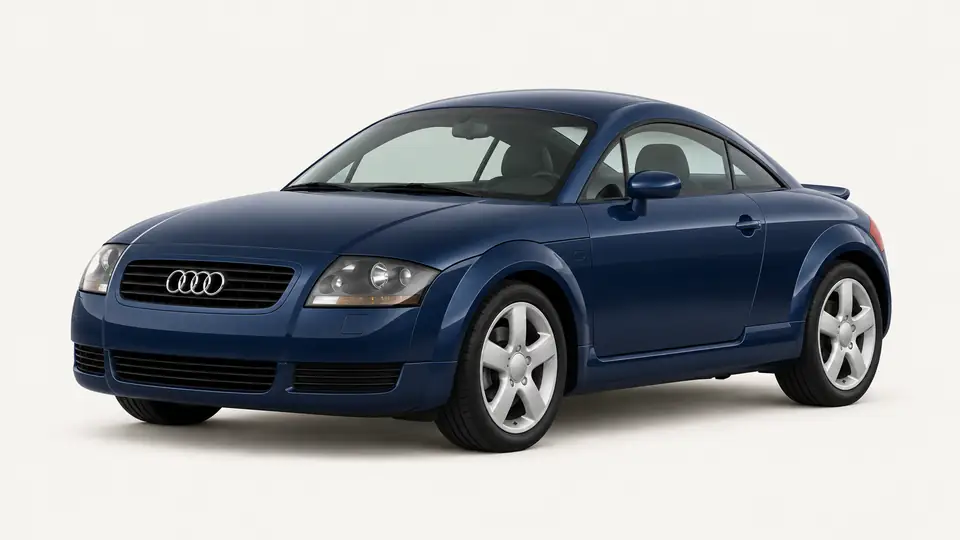
Should You Buy the 2000 Audi TT?
Only after careful checks. Our reliability score for the 2000 Audi TT is 61 out of 100, which rates Caution. Owners reported about 2.0 times as many problems as for the average car of the same age. It ranks 9th of the 9 TT years we score.
The most reported problem is the instrument cluster, mostly stopped working (27 of 73 complaints). Owners also complain about tires and the timing belt. 13 of the 73 complaints describe a serious outcome, such as a crash, a fire, an injury or stalling while driving.
It has 5 recalls. For comparison, the 2001 scores 67.
Before you buy, check that the recalls were done and get an independent inspection. The full checklist is at the end of this page.
Pros
- No do-not-drive or park-outside recalls
Cons
- About 2.0 times the problems of the average car its age
- Instrument cluster: stopped working27 complaints
- Tires: parts breaking or coming apart11 complaints
- Timing belt: parts breaking or coming apart9 complaints
How the 2000 TT Earned Its Score
Every model year starts at 100. Each part takes points away when this year has more problems than the average car of the same age. How we score
| Item | Vs average | Points lost |
|---|---|---|
| Starting score | 100 | |
| Serious problems | 1.4× | −20 |
| Everyday problems | 3.3× | −12 |
| Problems in the last two years | Not counted | – |
| Recalls | 1.3× | −7 |
| Score | 61 |
Problems in the last two years are not counted for the 2000 TT. If it were exactly average, its 7,381 cars would draw under 0.1 complaints in two years at this age, too few to compare. Their 30% moves to serious and everyday problems, which count for 80% of this score instead of 50%.
What Owners Report
We read all 73 complaints filed with NHTSA for the 2000 Audi TT, one by one, and grouped them by the problem they describe. The most reported problems come first. A complaint that describes more than one problem is counted under each, so the counts add up to more than 73.
Instrument cluster: stopped working
27 complaints (37%)
A feature that stopped working, problems that come and go and wrong readings. 1 of these 27 complaints describes a serious outcome: stalling or losing power while driving. In 3 complaints, the problem came back after a repair. Median mileage when it started: about 73,000 miles.
Tires: parts breaking or coming apart
11 complaints (15%)
Parts breaking or coming apart, damage and a leak. 2 of these 11 complaints describe a serious outcome, most often a tow. Median mileage when it started: about 18,000 miles.
Timing belt: parts breaking or coming apart
9 complaints (12%)
Parts breaking or coming apart. 6 of these 9 complaints describe a serious outcome, most often stalling or losing power while driving. Median mileage when it started: about 74,000 miles.
Ball joints and control arms: parts breaking or coming apart
5 complaints (7%)
Parts breaking or coming apart and shattering or cracking. 1 of these 5 complaints describes a serious outcome. Median mileage when it started: about 54,000 miles.
Fuel gauge or level sensor: wrong readings
3 complaints (4%)
Wrong readings. 1 of these 3 complaints describes a serious outcome: being stranded.
Climate controls: stopped working
2 complaints (3%)
A feature that stopped working.
Headlights: works on and off
2 complaints (3%)
Problems that come and go.
Power windows or regulator: works on and off
2 complaints (3%)
Problems that come and go and unusual noises.
Valve train: damage
2 complaints (3%)
Damage.
Wheel rim: parts breaking or coming apart
2 complaints (3%)
Parts breaking or coming apart and damage.
Reported Once (21)
Show the 21 problems reported once
- Airbag warning light
- Airbags: no deployment in a crash
- Brakes: damage
- Cooling system: parts breaking or coming apart
- Engine overheating
- Engine sensors or computer failure
- Hood latch: not opening or unlocking
- Screen and audio: stopped working
- Loss of power (cause not stated)
- Manual transmission or clutch: unusual noises
- Noise (cause not stated)
- Cylinder head: damage
- Drivetrain (part not stated): damage
- Serpentine belt: unusual noises
- Suspension (part not stated): early wear
- Parking brake: the car rolling away
- Seat belts: the system not working when needed
- Side or curtain airbags: deployment with no crash
- Sway bar links: damage
- Steering: loss of steering control
- Unexplained crash (cause not stated)
How the 2000 Audi TT Compares With Other Years
The other TT years of the 1st generation (8N), 2000 to 2006, and the years just before and after it.
| Year | Rating | Score | Vs average | Per 10k cars | Recalls | Most reported problem |
|---|---|---|---|---|---|---|
| 2006 | Not scored | – | – | 33.7 | 0 | Timing belt: parts breaking or coming apart |
| 2005 | Good | 76 | 0.74× | 32.7 | 0 | Airbag warning light |
| 2004 | Caution | 67 | 1.5× | 40.9 | 1 | Dual-clutch transmission: failure or loss of drive |
| 2003 | Good | 77 | 0.67× | 21.2 | 0 | Instrument cluster: wrong readings |
| 2002 | Good | 74 | 0.85× | 33.2 | 0 | Instrument cluster: stopped working |
| 2001 | Caution | 67 | 1.3× | 54.2 | 3 | Instrument cluster: wrong readings |
| 2000 This year | Caution | 61 | 2.0× | 89.4 | 5 | Instrument cluster: stopped working |
2000 Audi TT Recalls
Five recalls cover the 2000 Audi TT. The most recent was issued in June 2021: “Air Bag Inflators May Underinflate Bag.” A VIN check at NHTSA shows which are still open on a given car.
Air Bag Inflators May Underinflate Bag, June 2021
Due to a manufacturing issue, the NADI inflators may absorb moisture, possibly causing the air bag to deploy improperly in the event of a crash. In the event of a crash necessitating air bag deployment, the air bag may not properly protect the occupant, increasing the risk of serious injury or death.
NHTSA 21V470000Recall report (PDF)Owner letter (PDF)Issued Jun 23, 2021. By the third quarter of 2023, 5% of the cars in this recall had been fixed.
Air Bag Inflators May Underinflate Bag, January 2020
Due to a manufacturing issue, the NADI inflators may absorb moisture, possibly causing the air bag to deploy improperly in the event of a crash. In the event of a crash necessitating air bag deployment, the air bag may not properly protect the occupant, increasing the risk of serious injury or death.
NHTSA 20V056000Recall report (PDF)Owner letter (PDF)Issued Jan 31, 2020. By the second quarter of 2023, 2% of the cars in this recall had been fixed.
Vw/Rear Tract Control Arm
Corrosion could impede the free movement of the control arm.
NHTSA 01V325000Issued Oct 10, 2001.
Vw/Vehicle Handling
Passenger vehicles. In sharp high speed turns or abrupt lane change maneuvers at speeds substantially above posted speed limits, and depending upon road conditions, precise steering response may be demanded to retain directional stability. In the event control is lost, a crash may occur resulting in injury.
NHTSA 99V300000Issued Nov 10, 1999.
Vw/Fuel Line
A small section of the vehicle fuel line assembly may have been damaged during production. If damaged, fuel could leak to the outside. In the presence of an ignition source, cause a fire.
NHTSA 99V222000Issued Aug 12, 1999.
Check Before You Buy
A checklist for the 2000 TT, from its five recalls and the problems owners report most.
Confirm the Recalls Were Done
Ask the seller for proof that each of these recalls was repaired.
- Air Bag Inflators May Underinflate Bag, June 2021 NHTSA 21V470000
- Air Bag Inflators May Underinflate Bag, January 2020 NHTSA 20V056000
- Vw/Rear Tract Control Arm NHTSA 01V325000
- Vw/Vehicle Handling NHTSA 99V300000
- Vw/Fuel Line NHTSA 99V222000
On the Test Drive
- Test the screen, audio and phone connection for freezing or rebooting.
- Look for uneven tire wear and listen for clunks or humming that changes with speed.
- Ask when the timing belt was last replaced. An overdue belt is a big repair to budget for.
Ask the Seller
Ask whether any of these were ever repaired, and ask to see the receipts.
- Instrument cluster
- Tires
- Timing belt
- Also ask for the service records, especially oil changes.
Before You Pay
- Get an independent pre-purchase inspection from a mechanic you choose.
- Decode the VIN to confirm the model year, engine and trim.
- Check the title for salvage, flood or rebuilt branding.
What to do next