2005 Honda Pilot Reliability Report
NHTSA data as of Sep 17, 2026Published Oct 15, 2026
Ranks 15th of 21 Pilot years we score.
- Owner complaints
- 679
- 42 are recall notices
- Per 10,000 cars
- 44.7
- 142,473 made for the U.S.
- Vs the average car
- 1.5×
- same age, 1× is average
- Serious outcomes
- 276
- crash, fire, injury, stall or tow
- Recalls
- 13
- NHTSA crash rating
- Not rated
- no overall rating before 2011
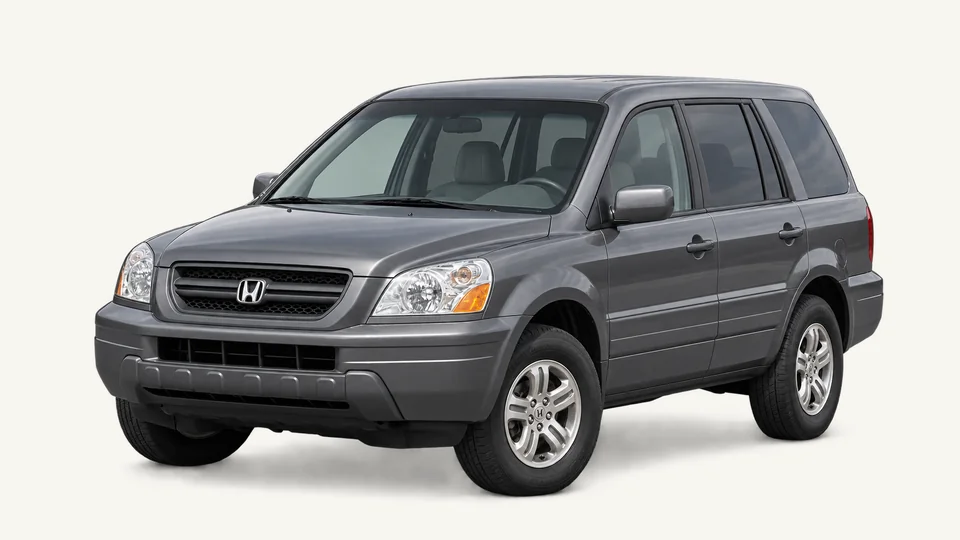
Should You Buy the 2005 Honda Pilot?
Only after careful checks. Our reliability score for the 2005 Honda Pilot is 62 out of 100, which rates Caution. Owners reported about 1.5 times as many problems as for the average car of the same age. It ranks 15th of the 21 Pilot years we score.
The most reported problem is the stability control, mostly hard braking with nothing ahead (106 of 679 complaints). Owners also complain about the transmission and the brakes. 276 of the 679 complaints describe a serious outcome, such as a crash, a fire, an injury or stalling while driving.
It has 13 recalls. For comparison, the 2004 scores 66 and the 2006 scores 77.
Before you buy, check that the recalls were done and get an independent inspection. The full checklist is at the end of this page.
Pros
- No do-not-drive or park-outside recalls
Cons
- About 1.5 times the problems of the average car its age
- Stability control (VSA): hard braking with nothing ahead106 complaints
- Transmission: failure or loss of drive96 complaints
- Brakes: hard braking with nothing ahead81 complaints
How the 2005 Pilot Earned Its Score
Every model year starts at 100. Each part takes points away when this year has more problems than the average car of the same age. How we score
| Item | Vs average | Points lost |
|---|---|---|
| Starting score | 100 | |
| Serious problems | 1.6× | −21 |
| Everyday problems | 1.3× | −8 |
| Recalls | 2.8× | −9 |
| Score | 62 |
What Owners Report
We read all 679 complaints filed with NHTSA for the 2005 Honda Pilot, one by one, and grouped them by the problem they describe. The most reported problems come first.
Stability control (VSA): hard braking with nothing ahead
106 complaints (16%)
Hard braking with nothing ahead, warning lights and the system acting on its own. 43 of these 106 complaints describe a serious outcome, most often sudden braking. In 4 complaints, the dealer could not find or fix the problem, and in 11 it came back after a repair. Median mileage when it started: about 115,000 miles.
Transmission: failure or loss of drive
96 complaints (14%)
Failure or loss of drive, vibration or shudder and warning lights. 27 of these 96 complaints describe a serious outcome, most often stalling or losing power while driving. In 3 complaints, the dealer could not find or fix the problem, and in 5 it came back after a repair. Median mileage when it started: about 100,000 miles.
Brakes: hard braking with nothing ahead
81 complaints (12%)
Hard braking with nothing ahead, the system acting on its own and locking up. 38 of these 81 complaints describe a serious outcome, most often sudden braking. In 17 complaints, the dealer could not find or fix the problem, and in 8 it came back after a repair. Median mileage when it started: about 98,000 miles.
Vibration (cause not stated)
52 complaints (8%)
Vibration or shudder and rough running or misfires. 1 of these 52 complaints describes a serious outcome. In 5 complaints, the dealer could not find or fix the problem, and in 3 it came back after a repair. Median mileage when it started: about 92,000 miles.
Cooling system: a leak
49 complaints (7%)
A leak, a failure that needed a new part and parts breaking or coming apart. 8 of these 49 complaints describe a serious outcome, most often a tow. In 4 complaints, the problem came back after a repair. Median mileage when it started: about 99,000 miles.
Airbag warning light
29 complaints (4%)
Warning lights and a failure. Median mileage when it started: about 130,000 miles.
Steering: vibration or shudder
23 complaints (3%)
Vibration or shudder, pulling or wandering and locking up. 7 of these 23 complaints describe a serious outcome, most often loss of steering control. In 4 complaints, the dealer could not find or fix the problem, and in 5 it came back after a repair. Median mileage when it started: about 93,000 miles.
Torque converter: vibration or shudder
23 complaints (3%)
Vibration or shudder, unusual noises and a failure. 1 of these 23 complaints describes a serious outcome. Median mileage when it started: about 89,000 miles.
Seats: parts breaking or coming apart
20 complaints (3%)
Parts breaking or coming apart, overheating and shattering or cracking. 7 of these 20 complaints describe a serious outcome, most often an injury. Median mileage when it started: about 128,000 miles.
Engine mounts failure
19 complaints (3%)
A failure that needed a new part, parts breaking or coming apart and vibration or shudder. Median mileage when it started: about 78,000 miles.
Wiring, fuses or body control module: damage
16 complaints (2%)
Damage, a failure and smoke or a burning smell. 2 of these 16 complaints describe a serious outcome. Median mileage when it started: about 137,000 miles.
Airbags: no deployment in a crash
15 complaints (2%)
No deployment in a crash, deployment burns and a feature that stopped working. 3 of these 15 complaints describe a serious outcome, most often a crash. Median mileage when it started: about 120,000 miles.
ABS: the system acting on its own
13 complaints (2%)
The system acting on its own, a failure that needed a new part and hard braking with nothing ahead. 7 of these 13 complaints describe a serious outcome, most often sudden braking. Median mileage when it started: about 89,000 miles.
Frame or structure: parts breaking or coming apart
13 complaints (2%)
Parts breaking or coming apart and rust or corrosion. 8 of these 13 complaints describe a serious outcome. Median mileage when it started: about 175,000 miles.
Unintended acceleration (cause not stated)
13 complaints (2%)
Sudden acceleration and surging. 8 of these 13 complaints describe a serious outcome, most often sudden acceleration or braking. Median mileage when it started: about 150,000 miles.
Show 49 more problems
Headlights: stopped working
12 complaints (2%)
A feature that stopped working and problems that come and go. 2 of these 12 complaints describe a serious outcome, most often loss of visibility. Median mileage when it started: about 136,000 miles.
Frontal airbag sensor failure
12 complaints (2%)
A failure and a stored fault code. Median mileage when it started: about 130,000 miles.
Transmission cooler or lines: a leak
10 complaints (1%)
A leak, parts breaking or coming apart and a failure. 6 of these 10 complaints describe a serious outcome, most often stalling or losing power while driving. Median mileage when it started: about 117,000 miles.
Frontal airbags: no deployment in a crash
9 complaints (1%)
No deployment in a crash, deployment with no crash and deployment injury. 3 of these 9 complaints describe a serious outcome, most often a crash. Median mileage when it started: about 150,000 miles.
Frontal impact sensor failure
9 complaints (1%)
A failure, warning lights and a feature that stopped working. Median mileage when it started: about 91,000 miles.
Stall (cause not stated)
8 complaints (1%)
Stalling. 7 of these 8 complaints describe a serious outcome, most often stalling or losing power while driving. Median mileage when it started: about 100,000 miles.
Tires: parts breaking or coming apart
8 complaints (1%)
Parts breaking or coming apart, early wear and a failure that needed a new part. 1 of these 8 complaints describes a serious outcome. Median mileage when it started: about 33,000 miles.
Seat belts: locking up
7 complaints (1%)
Locking up, not releasing and early wear. 2 of these 7 complaints describe a serious outcome, most often an injury. Median mileage when it started: about 163,000 miles.
Ignition or push-button start: locking up
6 complaints (under 1%)
Locking up, a feature that stopped working and sticking or stiffness. 4 of these 6 complaints describe a serious outcome, most often a car that would not start. Median mileage when it started: about 116,000 miles.
12V battery failure
5 complaints (under 1%)
A failure that needed a new part. Median mileage when it started: about 73,000 miles.
AWD or rear differential: warning lights
5 complaints (under 1%)
Warning lights, vibration or shudder and a failure. Median mileage when it started: about 147,000 miles.
Climate controls: stopped working
5 complaints (under 1%)
A feature that stopped working and sticking or stiffness. Median mileage when it started: about 110,000 miles.
Several warning lights at once
5 complaints (under 1%)
Warning lights. Median mileage when it started: about 147,000 miles.
Engine: stalling
5 complaints (under 1%)
Stalling, vibration or shudder and sudden acceleration. 2 of these 5 complaints describe a serious outcome, most often stalling or losing power while driving. Median mileage when it started: about 62,000 miles.
Climate control illumination: stopped working
5 complaints (under 1%)
A feature that stopped working. Median mileage when it started: about 40,000 miles.
Power windows or regulator failure
5 complaints (under 1%)
A failure, a feature that stopped working and problems that come and go. Median mileage when it started: about 100,000 miles.
Struts or shocks: a leak
5 complaints (under 1%)
A leak, a failure and loose. Median mileage when it started: about 149,000 miles.
Transmission fluid leak
5 complaints (under 1%)
A leak. 1 of these 5 complaints describes a serious outcome: a tow. Median mileage when it started: about 84,000 miles.
Uneven tire wear: early wear
4 complaints (under 1%)
Early wear and pulling or wandering.
Ignition coils or spark plugs: parts breaking or coming apart
4 complaints (under 1%)
Parts breaking or coming apart. 3 of these 4 complaints describe a serious outcome, most often a tow. Median mileage when it started: about 82,000 miles.
Noise (cause not stated)
4 complaints (under 1%)
Unusual noises. Median mileage when it started: about 90,000 miles.
Airbag sensor failure
4 complaints (under 1%)
A failure that needed a new part. Median mileage when it started: about 120,000 miles.
A/C: stopped working
3 complaints (under 1%)
A feature that stopped working and unusual noises. 1 of these 3 complaints describes a serious outcome. Median mileage when it started: about 70,000 miles.
Body seals (water leak): water leaking in
3 complaints (under 1%)
Water leaking in. Median mileage when it started: about 74,000 miles.
Check engine light (cause not stated)
3 complaints (under 1%)
Warning lights. Median mileage when it started: about 148,000 miles.
Door latches: the system acting on its own
3 complaints (under 1%)
The system acting on its own, parts breaking or coming apart and not opening or unlocking. 1 of these 3 complaints describes a serious outcome: an injury.
Loss of power (cause not stated)
3 complaints (under 1%)
A loss of power and reduced power or limp mode. 2 of these 3 complaints describe a serious outcome, most often stalling or losing power while driving. Median mileage when it started: about 99,000 miles.
Side or curtain airbags: no deployment in a crash
3 complaints (under 1%)
No deployment in a crash and deployment burns. 1 of these 3 complaints describes a serious outcome. Median mileage when it started: about 102,000 miles.
Tire pressure monitoring: warning lights
3 complaints (under 1%)
Warning lights and a failure that needed a new part.
Ball joints and control arms failure
2 complaints (under 1%)
A failure and parts breaking or coming apart.
Brake calipers: sticking or stiffness
2 complaints (under 1%)
Sticking or stiffness and smoke or a burning smell.
Engine failure: a loss of power
2 complaints (under 1%)
A loss of power and a failure that needed a new part. 1 of these 2 complaints describes a serious outcome.
Engine sensors or computer failure
2 complaints (under 1%)
A failure and a stored fault code.
Horn: stopped working
2 complaints (under 1%)
A feature that stopped working.
Screen and audio: unusual noises
2 complaints (under 1%)
Unusual noises.
Instrument cluster: stopped working
2 complaints (under 1%)
A feature that stopped working and problems that come and go.
Passenger airbag sensor failure
2 complaints (under 1%)
A failure.
Airbag crash sensor failure
2 complaints (under 1%)
A failure.
Brake sensor: fault code
2 complaints (under 1%)
A stored fault code and stalling.
Console lighting: stopped working
2 complaints (under 1%)
A feature that stopped working.
Fire (cause not stated)
2 complaints (under 1%)
A fire. Both describe a serious outcome, most often a fire.
Headlight switch: damage
2 complaints (under 1%)
Damage.
Transmission cooler failure
2 complaints (under 1%)
A failure and a leak.
Vehicle electrical power: works on and off
2 complaints (under 1%)
Problems that come and go and a feature that stopped working. Both describe a serious outcome, most often stalling or losing power while driving.
Parking brake: the car rolling away
2 complaints (under 1%)
The car rolling away and a failure that needed a new part.
Starter failure
2 complaints (under 1%)
A failure that needed a new part and the car not starting.
Transmission computer failure
2 complaints (under 1%)
A failure and harsh or delayed shifts.
Shifter or park: sticking or stiffness
2 complaints (under 1%)
Sticking or stiffness and the car rolling away. 1 of these 2 complaints describes a serious outcome.
Wheel bearings failure
2 complaints (under 1%)
A failure that needed a new part.
Reported Once (45)
Show the 45 problems reported once
- CVT: stalling
- Alternator or charging failure
- Control arm bushings: shattering or cracking
- CV axles: parts breaking or coming apart
- Engine oil consumption: burning or using oil
- Exhaust or catalytic converter: parts breaking or coming apart
- Ignition or power mode (won't shut off): not shutting off
- Interior trim: parts breaking or coming apart
- Key fob: stopped working
- Mirrors: parts breaking or coming apart
- EGR valve failure
- Accelerator: surging
- Accelerator pedal: sticking or stiffness
- Airbag impact sensors: stopped working
- Airbag power supply failure
- Airbag switch: stopped working
- Brake switch failure
- Cabin exposure (cause not stated)
- Cabin water leak (entry point unknown) (cause not stated)
- Child seat attachment belt: not closing or latching
- Cylinder head: damage
- Cylinder-head spark-plug threads: damage
- Drive train (unspecified) failure
- Fuel tank: unusual noises
- Headlight dimmer switch failure
- Interior lights: stopped working
- Relay: works on and off
- Roof: unusual noises
- Security alarm: the system acting on its own
- Side window glass: shattering or cracking
- Smoke (cause not stated)
- Steering wheel controls: stopped working
- Tailgate latch: loose
- Temperature warning light: the system not working when needed
- Unspecified damaged parts (cause not stated)
- Vehicle fire (origin not stated) (cause not stated)
- Wheel shimmy: vibration or shudder
- Oxygen sensor failure
- Sway bar links failure
- Car not starting (cause not stated)
- Sunroof glass (shattered): shattering or cracking
- Taillights or brake lights: stopped working
- Timing belt failure
- Unexplained crash (cause not stated)
- Wheels seized (cause not stated)
How the 2005 Honda Pilot Compares With Other Years
The other Pilot years of the 1st generation, 2003 to 2008, and the years just before and after it. When two scores are less than 3.5 points apart, treat them as about the same.
| Year | Rating | Score | Vs average | Per 10k cars | Recalls | Most reported problem |
|---|---|---|---|---|---|---|
| 2009 | Good | 78 | 0.34× | 13.6 | 9 | Engine oil consumption: burning or using oil |
| 2008 | Good | 79 | 0.33× | 12.6 | 7 | Seats: parts breaking or coming apart |
| 2007 | Good | 74 | 0.39× | 14.3 | 7 | Seats: parts breaking or coming apart |
| 2006 | Good | 77 | 0.48× | 15.5 | 8 | Stability control (VSA): the system acting on its own |
| 2005 This year | Caution | 62 | 1.5× | 44.7 | 13 | Stability control (VSA): hard braking with nothing ahead |
| 2004 | Caution | 66 | 1.1× | 36.0 | 12 | Seats: parts breaking or coming apart |
| 2003 | Caution | 61 | 1.7× | 52.2 | 13 | Transmission: harsh or delayed shifts |
2005 Honda Pilot Recalls
A recall can cover some or all cars of this model year. Look up a specific car by its VIN at NHTSA to see which recalls are still open on it.
Air bags: inflator module
An inflator explosion may result in sharp metal fragments striking the driver or other occupants resulting in serious injury or death.
NHTSA 19V501000Recall report (PDF)Owner letter (PDF)Issued Jun 27, 2019. By the fourth quarter of 2020, 42% of the cars in this recall had been fixed.
Air bags: inflator module
An inflator explosion may result in sharp metal fragments striking the driver or other occupants resulting in serious injury or death.
NHTSA 19V499000Recall report (PDF)Owner letter (PDF)Issued Jun 27, 2019. By the fourth quarter of 2020, 22% of the cars in this recall had been fixed.
Air bags: inflator module
An explosion of an inflator within the driver frontal air bag module may result in sharp metal fragments striking the driver, front seat passenger or other occupants resulting in serious injury or death.
NHTSA 19V182000Recall report (PDF)Owner letter (PDF)Issued Mar 6, 2019. By the third quarter of 2020, 49% of the cars in this recall had been fixed.
Air bags: inflator module
An incorrectly installed air bag may deploy improperly in the event of a crash, increasing the risk of injury.
NHTSA 18V268000Recall report (PDF)Owner letter (PDF)Issued Apr 26, 2018. By the third quarter of 2019, 85% of the cars in this recall had been fixed.
Air bags: inflator module
An inflator rupture may result in metal fragments striking the vehicle occupants resulting in serious injury or death.
NHTSA 17V029000Recall report (PDF)Owner letter (PDF)Issued Jan 10, 2017. By the second quarter of 2018, 68% of the cars in this recall had been fixed.
Air bags: inflator module
An inflator rupture may result in metal fragments striking the vehicle occupants resulting in serious injury or death.
NHTSA 16V344000Recall report (PDF)Owner letter (PDF)Issued May 23, 2016. By the third quarter of 2017, 58% of the cars in this recall had been fixed.
Show 7 more recalls
Air bags: inflator module
In the event of a crash necessitating deployment of the driver's frontal air bag, the inflator could rupture with metal fragments striking the driver or other occupants resulting in serious injury or death.
NHTSA 15V320000Recall report (PDF)Owner letter (PDF)Issued May 28, 2015. By the fourth quarter of 2017, 68% of the cars in this recall had been fixed.
Air bags
In the event of a crash necessitating deployment of the passengers frontal air bag, the inflator could rupture with metal fragments striking the vehicle occupants potentially resulting in serious injury or death.
NHTSA 14V700000Recall report (PDF)Owner letter (PDF)Issued Nov 4, 2014. By the first quarter of 2016, 70% of the cars in this recall had been fixed.
Air bags
In the event of a crash necessitating deployment of the passengers frontal air bag, the inflator could rupture with metal fragments striking the vehicle occupants potentially resulting in serious injury or death.
NHTSA 14V353000Recall report (PDF)Owner letter (PDF)Issued Jun 20, 2014. By the fourth quarter of 2015, 70% of the cars in this recall had been fixed.
Traction control system
Sudden inadvertent braking, especially without illumination of the brake lights, may increase the risk of a vehicle crash.
NHTSA 13V092000Owner letter (PDF)Issued Mar 14, 2013.
Exterior lighting: switch
If the terminal ends melt within the wiring harness connector, the low beam headlights may become inoperative, reducing driver visibility and increasing the risk of a crash.
NHTSA 12V136000Owner letter (PDF)Issued Mar 30, 2012.
Steering: column
Loss of steering control can cause a vehicle crash without prior notice.
NHTSA 05V039000Issued Feb 3, 2005.
Fuel system, gasoline: tank assembly
In a crash, the fuel tank could be damaged and leak fuel. Fuel leakage, in the presence of an ignition source, could result in a fire.
NHTSA 04V541000Issued Nov 18, 2004.
Honda Warranty Extensions and Programs
Repairs Honda agreed to cover or update outside a recall. Whether one applies depends on the VIN and the conditions listed. A Honda dealer can confirm.
- Customer support programHonda 18-053 and 20-015
Front passenger's airbag inflator
2 programs with the same terms. Which one applies depends on the VIN.
- The problem:
- The front passenger's airbag inflator can be faulty, and the airbag warning light comes on.
- The fix:
- A Honda dealer replaces the front passenger's airbag inflator for free.
- Who qualifies:
- The airbag warning light must be on. A Honda dealer test must show the inflator is faulty. Only replacement inflators that fail later are covered. Open inflator recalls must be done first. Salvage or branded titles are not covered.
- Coverage:
- 18-053: Covered until January 31, 2027.
- 20-015: Covered until January 31, 2030.
- Customer support programHonda 20-010
Driver's airbag inflator
- The problem:
- The driver's airbag inflator can be faulty, and the airbag warning light comes on.
- The fix:
- A Honda dealer replaces the driver's airbag inflator for free.
- Who qualifies:
- The airbag warning light must be on. A Honda dealer test must show the inflator is faulty. Only replacement inflators that fail later are covered. Open inflator recalls must be done first. Salvage or branded titles are not covered.
- Coverage:
- Covered until January 31, 2030.
- Customer support programHonda 18-047Ended
Driver's airbag inflator
- The problem:
- The driver's airbag inflator can be faulty, and the airbag warning light comes on.
- The fix:
- While the program ran, a Honda dealer replaced the driver's airbag inflator for free.
- Who qualifies:
- The airbag warning light had to be on. A Honda dealer test had to show the inflator was faulty. Only replacement inflators that failed later were covered. Salvage or branded titles were not covered.
- Coverage:
- The program ended on June 30, 2022.
- Customer support programHonda 18-050Ended
Front passenger's airbag inflator
- The problem:
- The front passenger's airbag inflator can be faulty, and the airbag warning light comes on.
- The fix:
- While the program ran, a Honda dealer replaced the front passenger's airbag inflator for free.
- Who qualifies:
- The airbag warning light had to be on. A Honda dealer test had to show the inflator was faulty. Only replacement inflators that failed later were covered. Salvage or branded titles were not covered.
- Coverage:
- The program ended on June 30, 2026.
NHTSA Investigations
Defect investigations by NHTSA that cover this model year, with what they found.
Both low beam headlights going out at once
Led to a recallNHTSA's engineering analysis looked at reports of both low beam headlights failing together. It covered 2002-2003 Civics, 2002-2004 CR-Vs and 2003-2005 Pilots. A worn switch wiring terminal could overheat and melt its connector. Honda recalled vehicles in two stages under recall 12V-136. NHTSA closed the case in September 2012.
NHTSA EA11012Opening report (PDF)Closing report (PDF)Sep 12, 2011 to Sep 17, 2012
Stability control malfunction in 2005 Pilots
ClosedA petition asked NHTSA to investigate stability control failures in 2005 Pilots, said to cause steering problems and unwanted braking. NHTSA found faults that can falsely detect a panic stop and brake hard. It counted 185 reports of unexpected braking and 20 of inappropriate stability activation. It granted the petition in October 2012 and opened preliminary evaluation PE12-028.
NHTSA DP12002Opening report (PDF)Closing report (PDF)Jun 4, 2012 to Oct 11, 2012
Unexpected braking and steering pull in 2005 Pilots
ClosedNHTSA's preliminary evaluation looked at 2005 Pilots whose stability control could brake hard or tug the steering unexpectedly. It found faults that can falsely detect a panic stop, plus faulty yaw rate sensors. It counted 22 owner reports and 18 Honda reports of sensor faults. NHTSA closed it in March 2013 by upgrading it to engineering analysis EA13-002.
NHTSA PE12028Opening report (PDF)Closing report (PDF)Oct 9, 2012 to Mar 15, 2013
Stability system braking without the pedal in 2005 Pilots
Led to a recallNHTSA's engineering analysis covered 2005 Pilots whose stability control could apply the brakes with no pedal input. Honda recalled about 183,576 Pilots and Acuras under recall 13V-092 to fix a damaged capacitor and a loose ground fastener. NHTSA found 106 related incidents, with no crashes or injuries. It closed the case in March 2013.
NHTSA EA13002Opening report (PDF)Closing report (PDF)Feb 21, 2013 to Mar 29, 2013
Takata air bag inflators rupturing, mostly in humid areas
Led to a recallNHTSA's preliminary evaluation began in June 2014 after six Takata air bag inflator ruptures. It covered Honda Accord, Civic, CR-V, Odyssey and Pilot models from 2001 to 2007, among others. All 10 makers started regional recalls within about two weeks. NHTSA asked them to widen the recalls. It closed in March 2015 and moved to engineering analysis EA15-001.
NHTSA PE14016Opening report (PDF)Closing report (PDF)Jun 11, 2014 to Mar 2, 2015
Takata air bag inflator ruptures across all makers
Still openNHTSA's engineering analysis, opened in February 2015, covers Takata air bag inflators that can rupture. It includes Honda Accord, Civic, CR-V, Odyssey and Pilot models from 2001 to 2007, among others. NHTSA is studying the root cause, the affected vehicles and whether repairs are adequate. The record links 194 recall campaigns to it. It is still open.
NHTSA EA15001Opening report (PDF)Open since Feb 24, 2015
Rupture risk in Takata inflators with a desiccant
Still openNHTSA's engineering analysis, opened in September 2021, asks whether Takata inflators with a moisture-trapping desiccant could degrade and rupture over time. They are not yet recalled. It covers Honda Accord, Civic, CR-V, Odyssey and Pilot models from 2001 to 2015, among others. No field ruptures have been reported in them. The case is still open.
NHTSA EA21002Opening report (PDF)Open since Sep 17, 2021
NHTSA Crash Test Ratings
NHTSA gave the 2005 Pilot no overall, frontal or side rating. It did rate each seat in those tests and lists the seat ratings under Rating Breakdown on its page. We show them the same way below. These tests are from before 2011, so the stars are not comparable with ratings for 2011 and newer models. See the 2005 Pilot ratings on NHTSA.gov.
4-door with side airbags
Check Before You Buy
A checklist for the 2005 Pilot, from its recalls, Honda's programs and the problems owners report most.
Confirm the Recalls Were Done
Ask the seller for proof that each of these recalls was repaired.
- Air bags: inflator module NHTSA 19V501000
- Air bags: inflator module NHTSA 19V499000
- Air bags: inflator module NHTSA 19V182000
- Air bags: inflator module NHTSA 18V268000
- Air bags: inflator module NHTSA 17V029000
- Look up the VIN at NHTSA to see all 13 recalls and which are still open.
On the Test Drive
- Accelerate gently from a stop and again at 20 to 40 mph. Shudder, slipping or harsh shifts are warning signs. Ask for the transmission fluid records.
- Brake firmly from a moderate speed. A soft, hard or pulsing pedal, or a brake warning light, is a warning sign.
- Check the coolant level and watch the temperature gauge on the test drive.
Ask the Seller
Ask whether any of these were ever repaired, and ask to see the receipts.
- Stability control
- Transmission
- Brakes
- Also ask for the service records, especially oil changes and transmission fluid changes.
Before You Pay
- Get an independent pre-purchase inspection from a mechanic you choose.
- Decode the VIN to confirm the model year, engine and trim.
- Check the title for salvage, flood or rebuilt branding.
What to do next