2000 Honda CR-V Reliability Report
NHTSA data as of Sep 17, 2026Published Oct 15, 2026
Ranks 3rd of 25 CR-V years we score.
- Owner complaints
- 129
- 32 are recall notices
- Per 10,000 cars
- 8.5
- 114,195 made for the U.S.
- Vs the average car
- 0.25×
- same age, 1× is average
- Serious outcomes
- 32
- crash, fire, injury, stall or tow
- Recalls
- 2
- NHTSA crash rating
- Not rated
- no overall rating before 2011
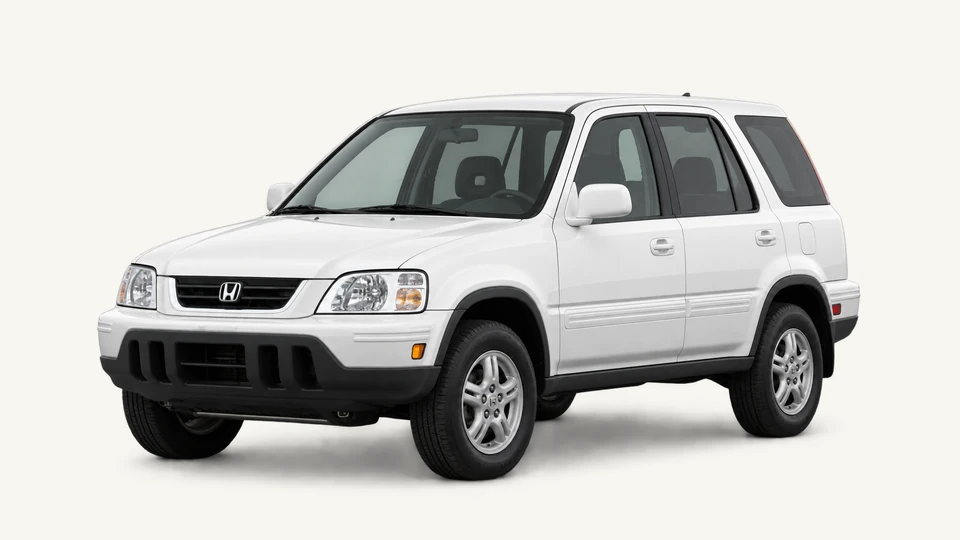
Should You Buy the 2000 Honda CR-V?
Yes. Our reliability score for the 2000 Honda CR-V is 87 out of 100, which rates Excellent. Owners reported about a third as many problems as for the average car of the same age. It ranks 3rd of the 25 CR-V years we score.
The most reported problem is tires, mostly parts breaking or coming apart (12 of 129 complaints). Owners also complain about the valve train and the engine. 32 of the 129 complaints describe a serious outcome, such as a crash, a fire, an injury or stalling while driving.
It has 2 recalls. For comparison, the 2001 scores 87.
Before you buy, check that the recalls were done and get an independent inspection. The full checklist is at the end of this page.
Pros
- Excellent reliability score of 87
- About a third of the problems of the average car its age
- No do-not-drive or park-outside recalls
Cons
- Tires: parts breaking or coming apart12 complaints
- Valve train failure9 complaints
- Engine: stalling7 complaints
How the 2000 CR-V Earned Its Score
Every model year starts at 100. Each part takes points away when this year has more problems than the average car of the same age. How we score
| Item | Vs average | Points lost |
|---|---|---|
| Starting score | 100 | |
| Serious problems | 0.24× | −5 |
| Everyday problems | 0.28× | −3 |
| Recalls | 0.76× | −5 |
| Score | 87 |
What Owners Report
We read all 129 complaints filed with NHTSA for the 2000 Honda CR-V, one by one, and grouped them by the problem they describe. The most reported problems come first.
Tires: parts breaking or coming apart
12 complaints (9%)
Parts breaking or coming apart, slipping and vibration or shudder. 7 of these 12 complaints describe a serious outcome, most often a crash. Median mileage when it started: about 60,000 miles.
Valve train failure
9 complaints (7%)
A failure, damage and early wear. 7 of these 9 complaints describe a serious outcome. Median mileage when it started: about 85,000 miles.
Engine: stalling
7 complaints (5%)
Stalling and rough running or misfires. 6 of these 7 complaints describe a serious outcome, most often stalling or losing power while driving. Median mileage when it started: about 169,000 miles.
Seat belts: not closing or latching
7 complaints (5%)
Not closing or latching, parts breaking or coming apart and locking up.
Transmission: harsh or delayed shifts
6 complaints (5%)
Harsh or delayed shifts and failure or loss of drive. 3 of these 6 complaints describe a serious outcome. Median mileage when it started: about 86,000 miles.
Airbags: no deployment in a crash
5 complaints (4%)
No deployment in a crash, damage and deployment with no crash. 2 of these 5 complaints describe a serious outcome, most often an airbag problem.
Door latches: not opening or unlocking
4 complaints (3%)
Not opening or unlocking, not closing or latching and rust or corrosion. 1 of these 4 complaints describes a serious outcome. Median mileage when it started: about 100,000 miles.
Cylinder head failure
4 complaints (3%)
A failure. 2 of these 4 complaints describe a serious outcome, most often stalling or losing power while driving. Median mileage when it started: about 92,000 miles.
AWD or rear differential failure
3 complaints (2%)
A failure and early wear.
Body seals (water leak): water leaking in
3 complaints (2%)
Water leaking in.
Ignition or push-button start: works on and off
3 complaints (2%)
Problems that come and go, locking up and a feature that stopped working. 1 of these 3 complaints describes a serious outcome: a car that would not start.
Shifter or park: damage
3 complaints (2%)
Damage, sticking or stiffness and the car rolling away. 1 of these 3 complaints describes a serious outcome.
A/C: stopped working
2 complaints (2%)
A feature that stopped working and water leaking in.
Airbag warning light
2 complaints (2%)
Warning lights and a failure.
CV axles: damage
2 complaints (2%)
Damage and unusual noises.
Show 5 more problems
Exterior trim: damage
2 complaints (2%)
Damage and a fire. 1 of these 2 complaints describes a serious outcome: a fire.
Frame or structure: collapsed in rollover
2 complaints (2%)
Collapsed in rollover and shattering or cracking. 1 of these 2 complaints describes a serious outcome: a crash.
Headlights: a fire
2 complaints (2%)
A fire and damage. 1 of these 2 complaints describes a serious outcome: a fire.
Car not starting (cause not stated)
2 complaints (2%)
Hard starting and the car not starting.
Unexplained crash (cause not stated)
2 complaints (2%)
Loss of steering control. 1 of these 2 complaints describes a serious outcome: loss of steering control.
Reported Once (27)
Show the 27 problems reported once
- Airbag inflator (rupture risk or Takata) failure
- Uneven tire wear: early wear
- Cooling system: a leak
- Frontal airbags: no deployment in a crash
- Ignition coils or spark plugs: stalling
- Loss of power (cause not stated)
- Manual transmission or clutch: unusual noises
- Noise (cause not stated)
- Body damage (part not stated)
- Brake or accelerator pedal clearance: sudden acceleration
- Cable reel or clock spring: parts breaking or coming apart
- Door hinges: unusual noises
- Electrical fire (part not stated)
- Fire (cause not stated)
- Oil dipstick and tube: parts breaking or coming apart
- Rolls backward on incline (cause not stated)
- Sensor (application not stated) failure
- Side window glass: damage
- Tire jack: unstable, falls over
- Vehicle fire (origin not stated) (cause not stated)
- Wheel assembly: parts breaking or coming apart
- Door lock actuators: stopped working
- Seats: parts breaking or coming apart
- Side or curtain airbags: no deployment in a crash
- Stall (cause not stated)
- Unintended acceleration (cause not stated)
- Vibration (cause not stated)
How the 2000 Honda CR-V Compares With Other Years
The other CR-V years of the 1st generation, 2000 to 2001, and the years just before and after it. When two scores are less than 3.5 points apart, treat them as about the same.
| Year | Rating | Score | Vs average | Per 10k cars | Recalls | Most reported problem |
|---|---|---|---|---|---|---|
| 2002 | Caution | 68 | 0.90× | 32.3 | 15 | A/C compressor: parts breaking or coming apart |
| 2001 | Excellent | 87 | 0.26× | 8.3 | 1 | Valve train: damage |
| 2000 This year | Excellent | 87 | 0.25× | 8.5 | 2 | Tires: parts breaking or coming apart |
2000 Honda CR-V Recalls
A recall can cover some or all cars of this model year. Look up a specific car by its VIN at NHTSA to see which recalls are still open on it.
Air bags: inflator module
In the event of a crash necessitating air bag deployment, an inflator rupture may result in metal fragments striking the driver or other occupants. An underinflated air bag cushion may not properly protect the occupant.
NHTSA 20V026000Recall report (PDF)Owner letter (PDF)Issued Jan 17, 2020. By the third quarter of 2022, 4% of the cars in this recall had been fixed.
Air bags: inflator module
In the event of a crash necessitating air bag deployment, an inflator rupture may result in metal fragments striking the driver or other occupants. An underinflated air bag cushion may not properly protect the occupant.
NHTSA 20V027000Recall report (PDF)Owner letter (PDF)Issued Jan 17, 2020. By the third quarter of 2022, 8% of the cars in this recall had been fixed.
NHTSA Crash Test Ratings
NHTSA gave the 2000 CR-V no overall, frontal or side rating. It did rate each seat in those tests and lists the seat ratings under Rating Breakdown on its page. We show them the same way below. These tests are from before 2011, so the stars are not comparable with ratings for 2011 and newer models. See the 2000 CR-V ratings on NHTSA.gov.
4-door 4x4
Check Before You Buy
A checklist for the 2000 CR-V, from its recalls, Honda's programs and the problems owners report most.
Confirm the Recalls Were Done
Ask the seller for proof that each of these recalls was repaired.
- Air bags: inflator module NHTSA 20V026000
- Air bags: inflator module NHTSA 20V027000
On the Test Drive
- Look for uneven tire wear and listen for clunks or humming that changes with speed.
- Accelerate gently from a stop and again at 20 to 40 mph. Shudder, slipping or harsh shifts are warning signs. Ask for the transmission fluid records.
- Confirm every airbag recall on this VIN has been repaired before you buy.
Ask the Seller
Ask whether any of these were ever repaired, and ask to see the receipts.
- Tires
- Valve train
- Engine
- Also ask for the service records, especially oil changes.
Before You Pay
- Get an independent pre-purchase inspection from a mechanic you choose.
- Decode the VIN to confirm the model year, engine and trim.
- Check the title for salvage, flood or rebuilt branding.
What to do next