2025 Honda Civic Reliability Report
NHTSA data as of Sep 17, 2026Published Oct 15, 2026
Final score after 36 months. Likely between 71 and 78.
- Owner complaints
- 94
- 9 are recall notices
- Per 10,000 cars
- 3.5
- 243,726 made for the U.S.
- Vs the average car
- 0.73×
- same age, so far
- Serious outcomes
- 35
- crash, fire, injury, stall or tow
- Recalls
- 2
- NHTSA crash rating
- 5★
- overall, out of 5
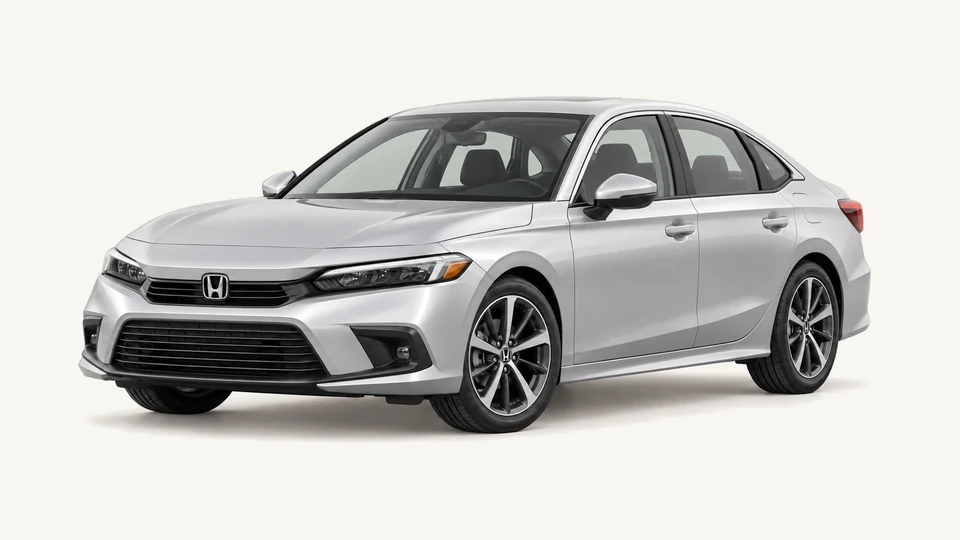
Should You Buy the 2025 Honda Civic?
It is too early to say for sure. We give a final score after 36 months of complaints. So far the 2025 Honda Civic has a provisional score of 75, likely between 71 and 78. That puts it in the better third of the 2025 vehicles we can compare.
The 2024 Civic, from the same generation, scored 76 and rated Good. That is a useful guide, not a guarantee.
The most reported problem is the steering, mostly sticking or stiffness (26 of 94 complaints). Owners also complain about adaptive cruise control and automatic emergency braking. 35 of the 94 complaints describe a serious outcome, such as a crash, a fire, an injury or stalling while driving.
It has 2 recalls. NHTSA rates it 5 out of 5 stars overall in crash tests.
Before you buy, check that the recalls were done and get an independent inspection. The full checklist is at the end of this page.
Pros
- No do-not-drive or park-outside recalls
- 5-star NHTSA overall crash rating
Cons
- Steering: sticking or stiffness26 complaints
- Adaptive cruise control: hard braking with nothing ahead8 complaints
- Automatic emergency braking: hard braking with nothing ahead8 complaints
Why There Is No Final Score Yet
Provisional score 75, likely between 71 and 78
It is based on complaints in its first 26 months, compared with the average car at the same age. It sits in the better third of the 24 model-year 2025 vehicles we can compare so far. The final score and rating come at 36 months.
It is the same generation as the 2024 Civic, which scored 76 and rated Good. That is a useful guide, not a guarantee.
What Owners Report
We read all 94 complaints filed with NHTSA for the 2025 Honda Civic, one by one, and grouped them by the problem they describe. The most reported problems come first.
Steering: sticking or stiffness
26 complaints (28%)
Sticking or stiffness, unusual noises and loss of steering control. 4 of these 26 complaints describe a serious outcome, most often loss of steering control. In 6 complaints, the dealer could not find or fix the problem. Median mileage when it started: about 8,000 miles.
Adaptive cruise control: hard braking with nothing ahead
8 complaints (9%)
Hard braking with nothing ahead, a feature that stopped working and the system not working when needed. 7 of these 8 complaints describe a serious outcome, most often sudden braking.
Automatic emergency braking: hard braking with nothing ahead
8 complaints (9%)
Hard braking with nothing ahead and warning lights. 4 of these 8 complaints describe a serious outcome, most often sudden braking. In 3 complaints, the dealer could not find or fix the problem.
Brakes: loss of braking
5 complaints (5%)
Loss of braking, unusual noises and early wear. 2 of these 5 complaints describe a serious outcome, most often a crash.
Sunroof glass (shattered): shattering or cracking
4 complaints (4%)
Shattering or cracking. 1 of these 4 complaints describes a serious outcome.
Windshield: shattering or cracking
4 complaints (4%)
Shattering or cracking.
Frontal airbags: partially inflated
3 complaints (3%)
Partially inflated, deployment with no crash and no deployment in a crash. 1 of these 3 complaints describes a serious outcome: an airbag problem.
High-pressure fuel pump failure
3 complaints (3%)
A failure, stalling and a loss of power. All 3 describe a serious outcome, most often stalling or losing power while driving.
Lane keeping assist: the system acting on its own
3 complaints (3%)
The system acting on its own and problems that come and go. 2 of these 3 complaints describe a serious outcome, most often a crash.
Struts or shocks: a leak
3 complaints (3%)
A leak, unusual noises and parts breaking or coming apart.
Body seals (water leak): water leaking in
2 complaints (2%)
Water leaking in.
Engine: stalling
2 complaints (2%)
Stalling. Both describe a serious outcome, most often stalling or losing power while driving.
Fuel injector: rough running or misfires
2 complaints (2%)
Rough running or misfires.
Screen and audio: unusual noises
2 complaints (2%)
Unusual noises and a feature that stopped working.
Road departure mitigation: warning lights
2 complaints (2%)
Warning lights.
Show 4 more problems
Seats: unusual noises
2 complaints (2%)
Unusual noises and not closing or latching.
Tires: parts breaking or coming apart
2 complaints (2%)
Parts breaking or coming apart. Both describe a serious outcome, most often a tow.
Transmission: harsh or delayed shifts
2 complaints (2%)
Harsh or delayed shifts and damage.
Vibration (cause not stated)
2 complaints (2%)
Vibration or shudder.
Reported Once (19)
Show the 19 problems reported once
- Defroster: stopped working
- CV axles: failure or loss of drive
- Fuel system: a fire
- Hybrid battery: high fuel use
- Ignition coils or spark plugs: damage
- Interior trim: damage
- Driver-assist camera and radar: stopped working
- Accelerator pedal: not releasing
- Aluminum pedals (slippery): slippery surface
- Child seat harness (separate product): loosens without release lever
- Electric brake control (simulator set): soft pedal
- Sensors: stopped working
- Paint and rust: damage
- Poor acceleration (cause not stated)
- Seat belts: the system not working when needed
- Transmission fluid leak
- Unexplained crash (cause not stated)
- Unintended acceleration (cause not stated)
- Windshield wipers: ice buildup
How the 2025 Honda Civic Compares With Other Years
The other Civic years of the 11th generation, 2022 to 2026, and the years just before and after it.
| Year | Rating | Score | Vs average | Per 10k cars | Recalls | Most reported problem |
|---|---|---|---|---|---|---|
| 2026 | Too new | – | – | 1.6 | 1 | Automatic emergency braking: hard braking with nothing ahead |
| 2025 This year | Provisional 75 | – | – | 3.5 | 2 | Steering: sticking or stiffness |
| 2024 | Good | 76 | 0.60× | 4.7 | 3 | Steering: sticking or stiffness |
| 2023 | Caution | 67 | 1.5× | 20.1 | 5 | Steering: sticking or stiffness |
| 2022 | Caution | 64 | 2.5× | 43.7 | 4 | Steering: sticking or stiffness |
| 2021 | Good | 78 | 0.41× | 8.1 | 4 | Steering: sticking or stiffness |
2025 Honda Civic Recalls
Two recalls cover the 2025 Honda Civic. The most recent was issued in October 2024: “High-Pressure Fuel Pump May Leak.” A VIN check at NHTSA shows which are still open on a given car.
High-Pressure Fuel Pump May Leak
A fuel leak in the presence of an ignition source can increase the risk of a fire.
NHTSA 24V763000Recall report (PDF)Owner letter (PDF)Issued Oct 14, 2024. By the second quarter of 2026, 92% of the cars in this recall had been fixed.
Difficulty Steering from Steering Gearbox Damage
Difficulty steering can increase the risk of a crash.
NHTSA 24V744000Recall report (PDF)Owner letter (PDF)Issued Oct 3, 2024. By the second quarter of 2026, 88% of the cars in this recall had been fixed.
NHTSA Crash Test Ratings
NHTSA 5-Star Safety Ratings for this model year. See the 2025 Civic ratings on NHTSA.gov.
Hatchback 5-door FWD, Hatchback Hybrid 5-door FWD, Sedan 4-door FWD, Sedan Hybrid 4-door FWD and Sedan Si 4-door FWD
Hatchback Type R 5-door FWD
Check Before You Buy
A checklist for the 2025 Civic, from its two recalls and the problems owners report most.
Confirm the Recalls Were Done
Ask the seller for proof that each of these recalls was repaired.
- High-Pressure Fuel Pump May Leak NHTSA 24V763000
- Difficulty Steering from Steering Gearbox Damage NHTSA 24V744000
On the Test Drive
- Turn the wheel fully left and right, parked and at low speed. Sticking, notches or stiffness are warning signs.
- Watch for sudden braking or steering with nothing ahead, and ask whether the driver-assist software updates were done.
- Brake firmly from a moderate speed. A soft, hard or pulsing pedal, or a brake warning light, is a warning sign.
Ask the Seller
Ask whether any of these were ever repaired, and ask to see the receipts.
- Steering
- Adaptive cruise control
- Automatic emergency braking
- Also ask for the service records, especially oil changes.
Before You Pay
- Get an independent pre-purchase inspection from a mechanic you choose.
- Decode the VIN to confirm the model year, engine and trim.
- Check the title for salvage, flood or rebuilt branding.
What to do next