2010 Audi A6 Reliability Report
NHTSA data as of Oct 15, 2026Published Oct 19, 2026
Ranks 2nd of 22 A6 years we score.
- Owner complaints
- 18
- 10 are recall notices
- Per 10,000 cars
- 11.6
- 6,908 made for the U.S.
- Vs the average car
- 0.40×
- same age, 1× is average
- Serious outcomes
- 3
- crash, fire, injury, stall or tow
- Recalls
- 3
- NHTSA crash rating
- –
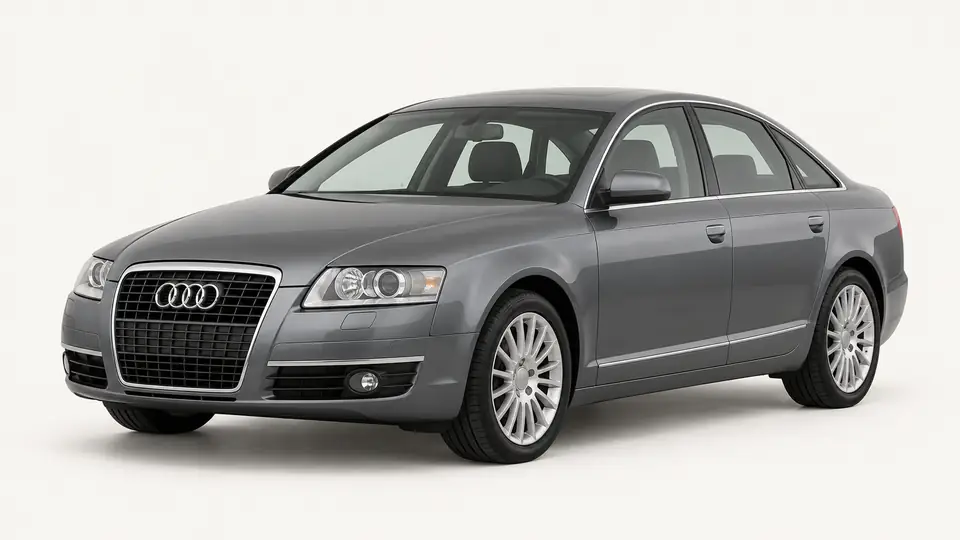
Should You Buy the 2010 Audi A6?
Yes. Our reliability score for the 2010 Audi A6 is 81 out of 100, which rates Excellent. Owners reported about a third as many problems as for the average car of the same age. It ranks 2nd of the 22 A6 years we score.
The most reported problem is the cooling system, mostly a leak (2 of 18 complaints). Owners also complain about seat belts and tires. 3 of the 18 complaints describe a serious outcome, such as a crash, a fire, an injury or stalling while driving.
It has 3 recalls. Audi also offers three warranty extensions that may still apply, for problems with the engine and airbags. For comparison, the 2009 scores 79 and the 2011 scores 78.
Before you buy, check that the recalls were done, ask an Audi dealer about warranty extension AWA-13-07 and get an independent inspection. The full checklist is at the end of this page.
Pros
- Excellent reliability score of 81
- About a third of the problems of the average car its age
- No do-not-drive or park-outside recalls
- 3 Audi warranty extensions may cover repairs
Cons
- Cooling system: a leak2 complaints
- Seat belts: not closing or latching2 complaints
- Tires: parts breaking or coming apart2 complaints
How the 2010 A6 Earned Its Score
Every model year starts at 100. Each part takes points away when this year has more problems than the average car of the same age. How we score
| Item | Vs average | Points lost |
|---|---|---|
| Starting score | 100 | |
| Serious problems | 0.39× | −9 |
| Everyday problems | 0.40× | −4 |
| Problems in the last two years | Not counted | – |
| Recalls | 0.80× | −6 |
| Score | 81 |
Problems in the last two years are not counted for the 2010 A6. If it were exactly average, its 6,908 cars would draw about 0.7 complaints in two years at this age, too few to compare. Their 30% moves to serious and everyday problems, which count for 80% of this score instead of 50%.
What Owners Report
We read all 18 complaints filed with NHTSA for the 2010 Audi A6, one by one, and grouped them by the problem they describe. The most reported problems come first.
Cooling system: a leak
2 complaints (11%)
A leak and overheating. 1 of these 2 complaints describes a serious outcome: loss of visibility.
Seat belts: not closing or latching
2 complaints (11%)
Not closing or latching and not releasing.
Tires: parts breaking or coming apart
2 complaints (11%)
Parts breaking or coming apart and damage.
Reported Once (3)
Show the 3 problems reported once
- Airbag warning light
- Airbags: no deployment in a crash
- Headlights: works on and off
How the 2010 Audi A6 Compares With Other Years
The other A6 years of the 6th generation (C6), 2005 to 2011, and the years just before and after it.
| Year | Rating | Score | Vs average | Per 10k cars | Recalls | Most reported problem |
|---|---|---|---|---|---|---|
| 2012 | Good | 70 | 0.88× | 28.4 | 8 | Cooling system: a leak |
| 2011 | Good | 78 | 0.52× | 15.2 | 3 | Seats: parts breaking or coming apart |
| 2010 This year | Excellent | 81 | 0.40× | 11.6 | 3 | Cooling system: a leak |
| 2009 | Good | 79 | 0.45× | 11.7 | 4 | – |
| 2008 | Good | 78 | 0.51× | 18.0 | 4 | Headlights: works on and off |
| 2007 | Good | 74 | 0.72× | 22.3 | 4 | Steering: sticking or stiffness |
| 2006 | Good | 76 | 0.60× | 18.8 | 4 | Steering: locking up |
| 2005 | Good | 72 | 0.84× | 28.1 | 3 | Parking brake: not releasing |
| 2004 | Good | 77 | 0.51× | 15.8 | 4 | Fuel leak |
2010 Audi A6 Recalls
Three recalls cover the 2010 Audi A6. The most recent was issued in June 2018: “Passenger Frontal Air Bag Inflator May Explode.” A VIN check at NHTSA shows which are still open on a given car.
Passenger Frontal Air Bag Inflator May Explode, June 2018
An inflator explosion may result in sharp metal fragments striking the driver or other occupants resulting in serious injury or death.
NHTSA 18V427000Recall report (PDF)Owner letter (PDF)Issued Jun 22, 2018. By the third quarter of 2019, 41% of the cars in this recall had been fixed.
Passenger Frontal Air Bag Inflator May Explode, January 2018
An inflator explosion may result in sharp metal fragments striking the driver or other occupants resulting in serious injury or death.
NHTSA 18V004000Recall report (PDF)Issued Jan 4, 2018.
Passenger Frontal Air Bag Inflator May Rupture
An inflator rupture may result in metal fragments striking the vehicle occupants resulting in serious injury or death.
NHTSA 16V382000Recall report (PDF)Owner letter (PDF)Issued Jun 1, 2016. By the second quarter of 2018, 33% of the cars in this recall had been fixed.
2010 Audi A6 Warranty Extensions and Programs
Audi has three warranty extensions for the 2010 Audi A6, separate from its recalls. They are for problems with the engine and airbags. Whether one applies to a car depends on its VIN, which an Audi dealer can check.
- Warranty extensionAudi AWA-13-07
Carbon buildup in engine secondary air ports
- The problem:
- Carbon can build up in the engine's secondary air ports. Fault codes then turn on the check engine light, and the car can fail an emissions test.
- The fix:
- An Audi dealer diagnoses the problem and, if needed, cleans the carbon out of the secondary air ports for free.
- Who qualifies:
- Certain 2009 to 2012 Audis with the 3.2 engine and 2009 to 2013 Audis with the 3.0T engine. Other causes of the warning light and damage from tuned engine computers are not covered.
- Coverage:
- 10 years or 120,000 miles from the original in-service date, whichever comes first.
- Warranty extension
Powertrain warranty after coolant pump seal leaks
- The problem:
- A seal inside the coolant pump can wear out early and leak coolant. Audi extended the powertrain warranty for certain affected cars.
- The fix:
- An Audi dealer diagnoses and repairs any problem with the engine, transmission, differential or axles for free.
- Who qualifies:
- Certain 2009 to 2011 Audis with a 3.0 TFSI, 3.0 TDI or 3.2 FSI engine, in the coolant pump campaign or with a replaced pump. Only the owner Audi wrote to is covered, not later owners.
- Coverage:
- 5 years or 100,000 miles from the original in-service date, whichever comes first.
- Warranty extensionAudi AWA-22-04
Takata driver or passenger airbag inflator failure
- The problem:
- The driver or passenger Takata airbag inflator can fail from a defect. This extension is for cars in the Takata inflator recall.
- The fix:
- An Audi dealer diagnoses the inflators and replaces a failed inflator for free. Inoperable or totaled cars and salvage, rebuilt or flood titles are not covered.
- Who qualifies:
- Cars in the Takata recall. After the main term, coverage lasts 75,000 miles from the recall repair or a time limit, whichever is greater: November 10, 2023, or 2 years if repaired after November 10, 2021.
- Coverage:
- 10 years from the recall repair or 150,000 miles from the original in-service date, whichever comes first. Then a further period applies.
Check Before You Buy
A checklist for the 2010 A6, from its three recalls, three Audi warranty extensions that may still apply and the problems owners report most.
Confirm the Recalls Were Done
Ask the seller for proof that each of these recalls was repaired.
- Passenger Frontal Air Bag Inflator May Explode, June 2018 NHTSA 18V427000
- Passenger Frontal Air Bag Inflator May Explode, January 2018 NHTSA 18V004000
- Passenger Frontal Air Bag Inflator May Rupture NHTSA 16V382000
Ask an Audi Dealer
Ask whether each of these warranty extensions applies to this VIN, and whether the work was done.
- AWA-13-07: carbon buildup in engine secondary air ports
- Powertrain warranty after coolant pump seal leaks
- AWA-22-04: takata driver or passenger airbag inflator failure
On the Test Drive
- Check the coolant level and watch the temperature gauge on the test drive.
- Look for uneven tire wear and listen for clunks or humming that changes with speed.
Ask the Seller
Ask whether any of these were ever repaired, and ask to see the receipts.
- Cooling system
- Seat belts
- Tires
- Also ask for the service records, especially oil changes.
Before You Pay
- Get an independent pre-purchase inspection from a mechanic you choose.
- Decode the VIN to confirm the model year, engine and trim.
- Check the title for salvage, flood or rebuilt branding.
What to do next